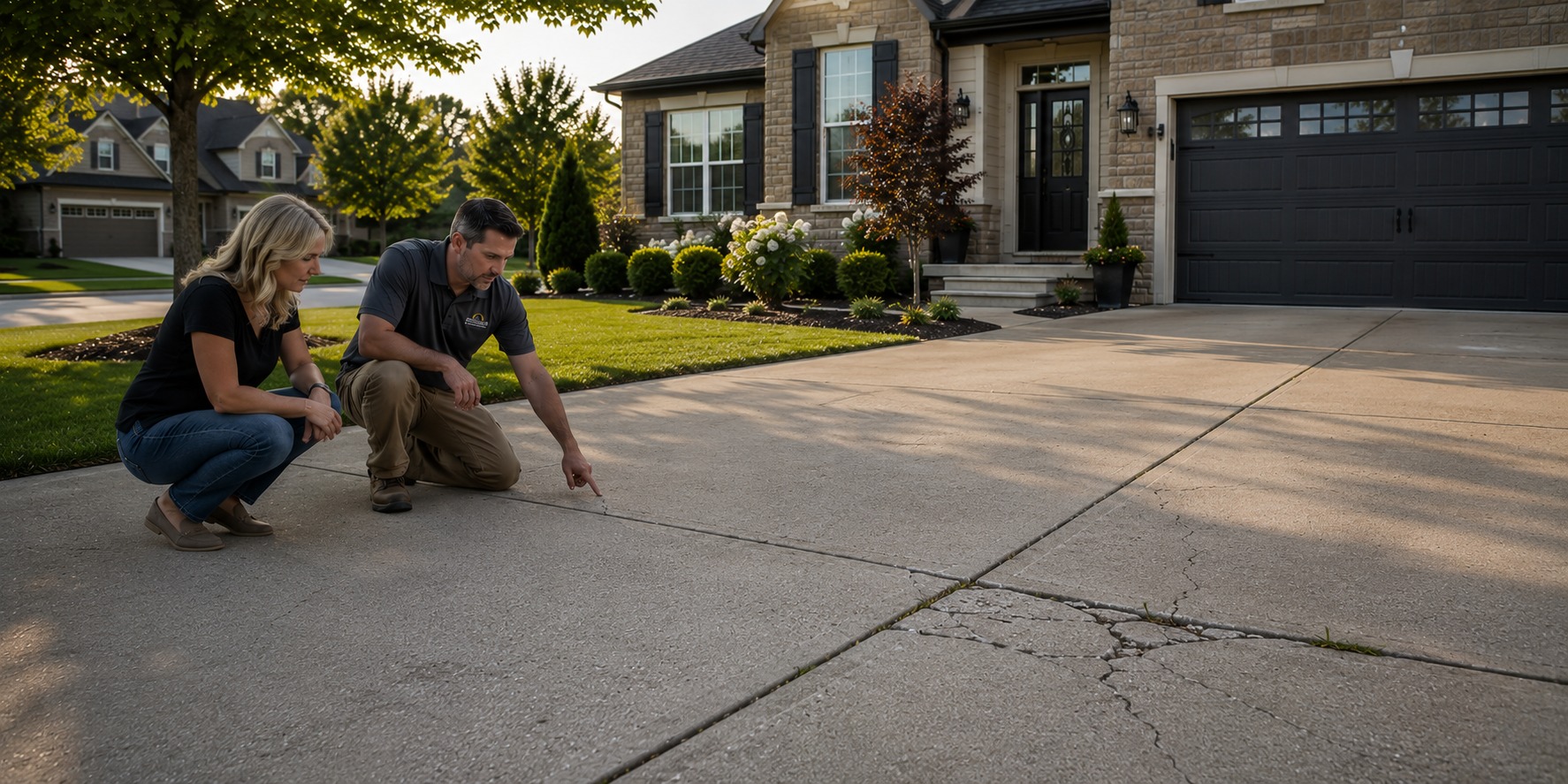
Replacing a concrete driveway is one of the biggest exterior investments most homeowners will make. A well-built driveway should last 30 years or more — improving curb appeal, adding genuine property value, and performing reliably through Missouri's punishing freeze-thaw cycles. But cut a corner during installation and you can face expensive repairs within just a few winters.
If you're planning to replace or expand your driveway anywhere in the St. Louis metro, here's what to know before requesting your first estimate.
A concrete driveway should last 30 years or more. The difference between one that lasts five years and one that lasts thirty is rarely the concrete itself — it’s what happens before the truck ever arrives.
Start With the Foundation, Not the Concrete
Many homeowners focus on the thickness of the concrete itself, but the base underneath is often even more important. A properly prepared gravel base prevents settling, cracking, and premature failure. Poor soil preparation can lead to expensive repairs within just a few years — repairs that might have been entirely preventable.
The base preparation beneath the concrete is often more important than increasing slab thickness from 4 inches to 5 inches. Ask every contractor how many inches of compacted gravel base they plan to install — and whether they compact it before and after placement.
When comparing quotes, ask contractors specifically how they prepare the base before the concrete is poured. “Compact the existing soil” and “add 4 inches of compacted gravel base” tell very different stories about long-term performance.
Not All Concrete Mixes Are Equal
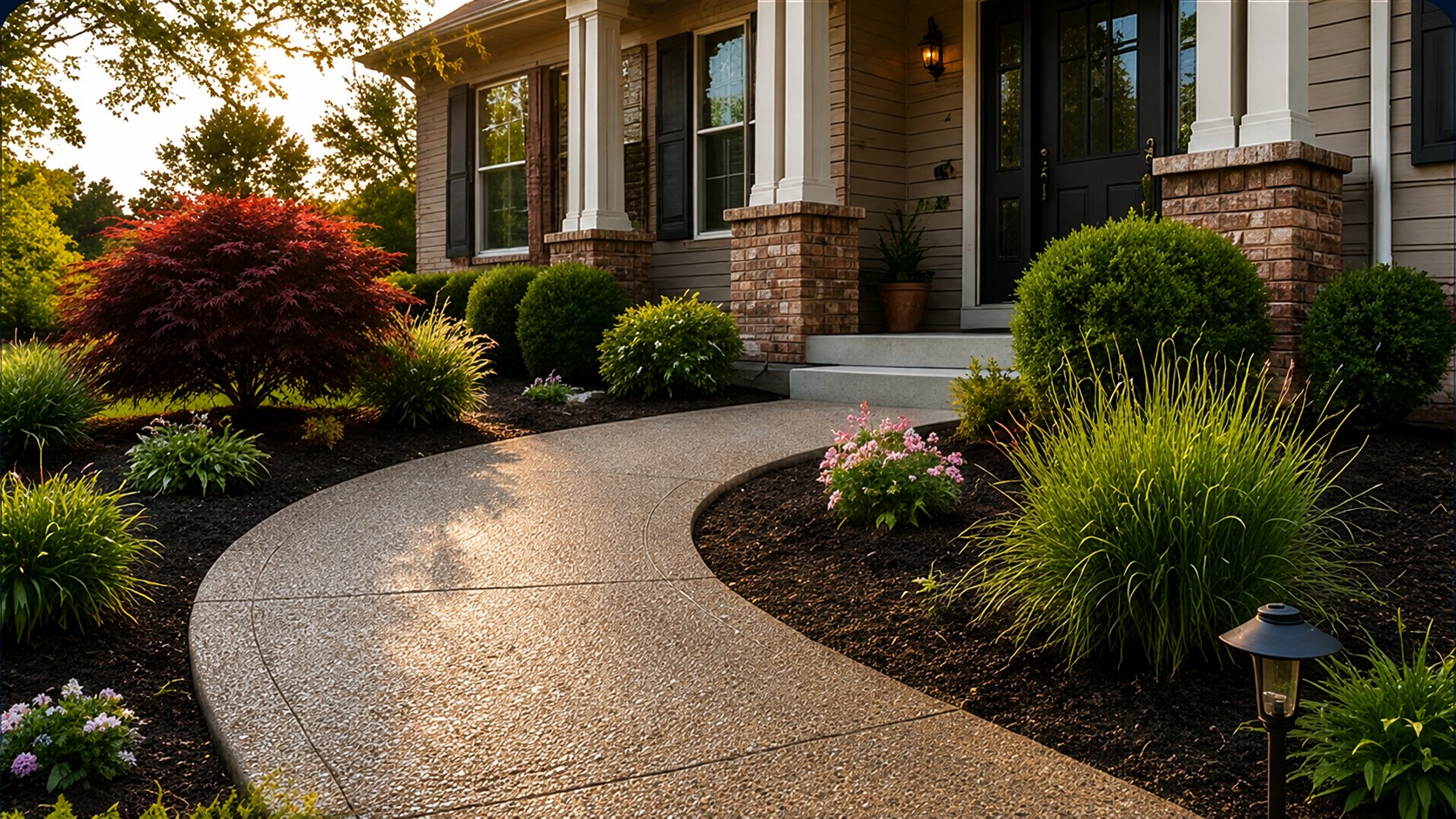
Concrete is not a one-size-fits-all product. Different mix designs provide different strengths, curing characteristics, and resistance to freeze-thaw cycles. Missouri experiences dramatic seasonal temperature swings — conditions that can stress lower-quality mixes into premature cracking within just a few winters.
Missouri's freeze-thaw cycles make drainage, air-entrained concrete, and proper curing especially important. A mix that performs adequately in Atlanta or Dallas can deteriorate rapidly through a St. Charles County winter when it lacks proper air entrainment.
- What PSI mix will be used? (4,000 PSI minimum recommended for St. Charles County driveways)
- Is air entrainment specified? (critical for freeze-thaw resistance)
- Is fiber reinforcement included?
- What water-to-cement ratio does the mix use?
Consider How You Actually Use Your Driveway
Think beyond simply parking cars. The design decisions you make today should accommodate how you'll use the space over the next 20 to 30 years.
- Will you eventually own heavier trucks or SUVs?
- Do delivery trucks regularly use the driveway?
- Will you need additional parking for teenagers or guests in a few years?
- Would a wider turnaround improve daily convenience?
- Is future RV parking a possibility?
Expanding the design during replacement is often far less expensive than adding concrete later, when new forms, base prep, and mobilization costs start from scratch.
Decorative Concrete Has Become Increasingly Popular
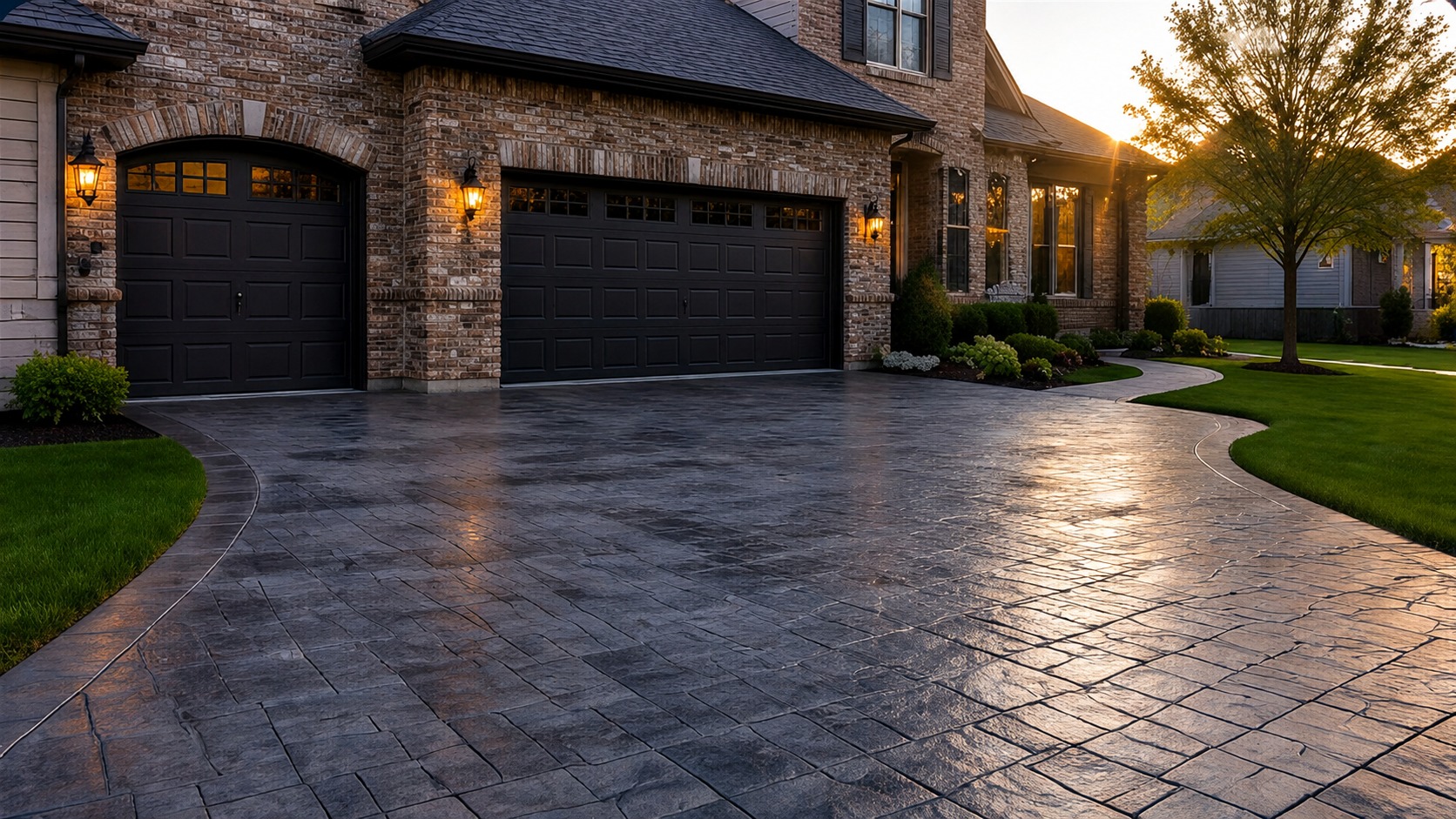
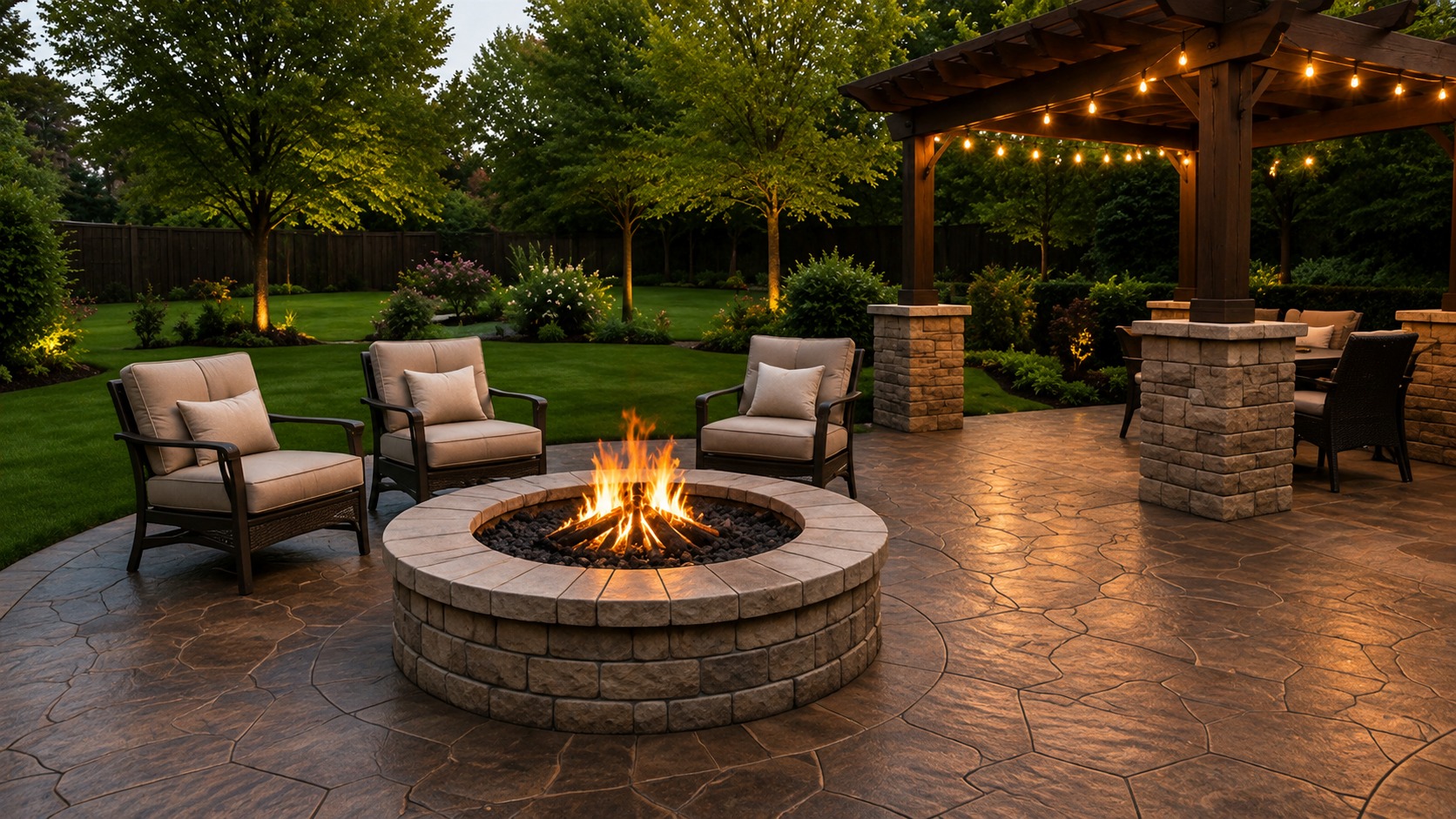
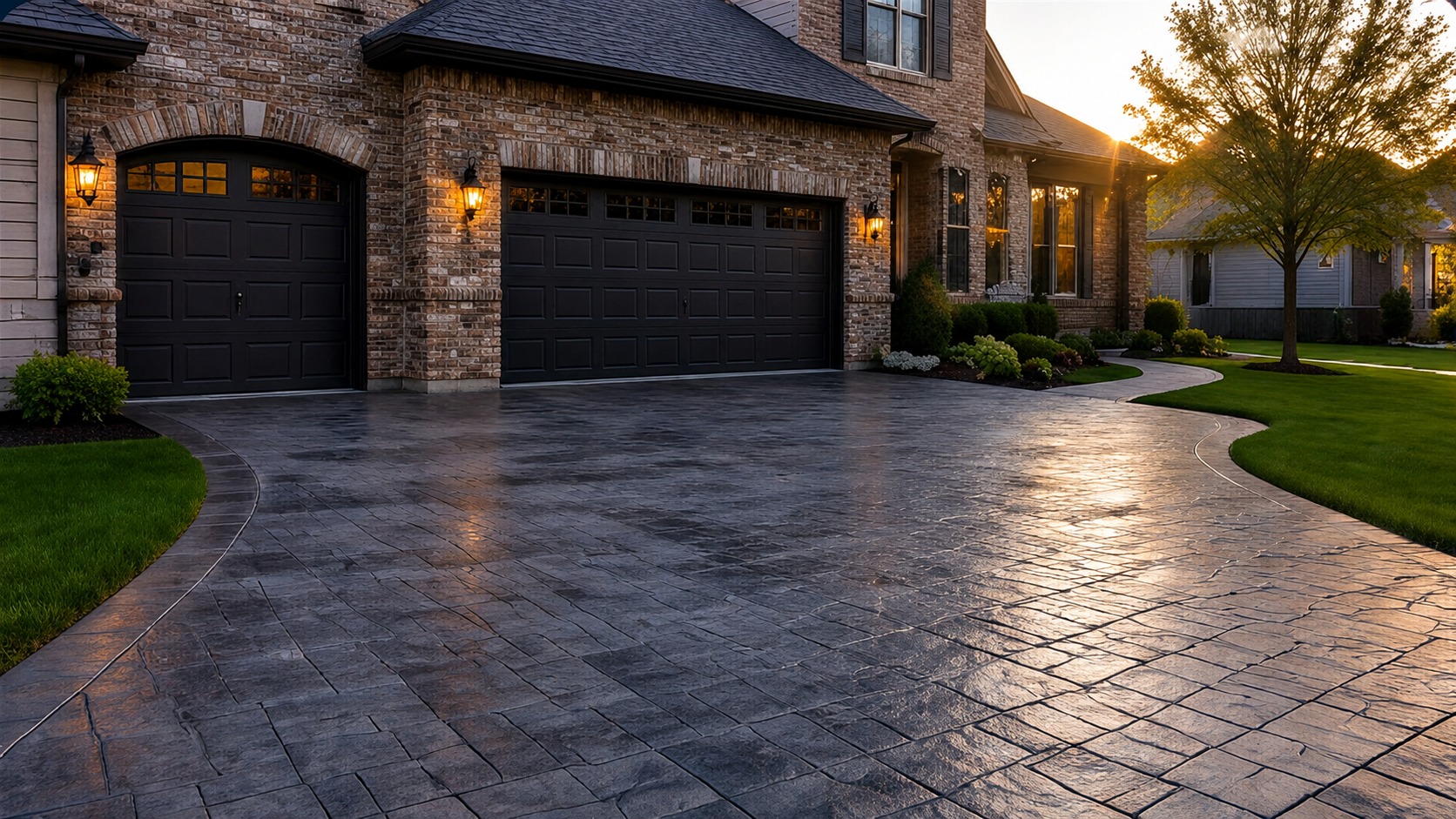
Stamped and decorative concrete can dramatically improve curb appeal without the ongoing maintenance requirements of natural stone pavers. Popular options throughout St. Charles County include:
- Ashlar Slate — a natural stone look with rectangular grid patterning
- Wood Plank — realistic wood-grain texture in a concrete surface
- European Fan — a classic radial pattern popular for curved entry areas
- Cobblestone — a traditional rounded-stone look
- Seamless Stone Textures — subtler, more uniform surface finishes
Color hardeners and antiquing releases can further customize the appearance while maintaining the durability that makes concrete the right choice for Midwest climates.
Drainage Matters More Than Most Homeowners Realize
One of the leading causes of driveway deterioration is poor drainage — a problem that is far more common than most homeowners realize until it is too late.
Water should move efficiently away from both the home and the driveway surface. Pooling water, improper grading, or inadequate expansion joints can significantly shorten the life of a new installation regardless of how good the concrete itself is.
Proper drainage planning is particularly important in the rolling terrain common throughout St. Charles County, where natural grade changes create real drainage challenges.
Understand Expansion Joints and Control Joints
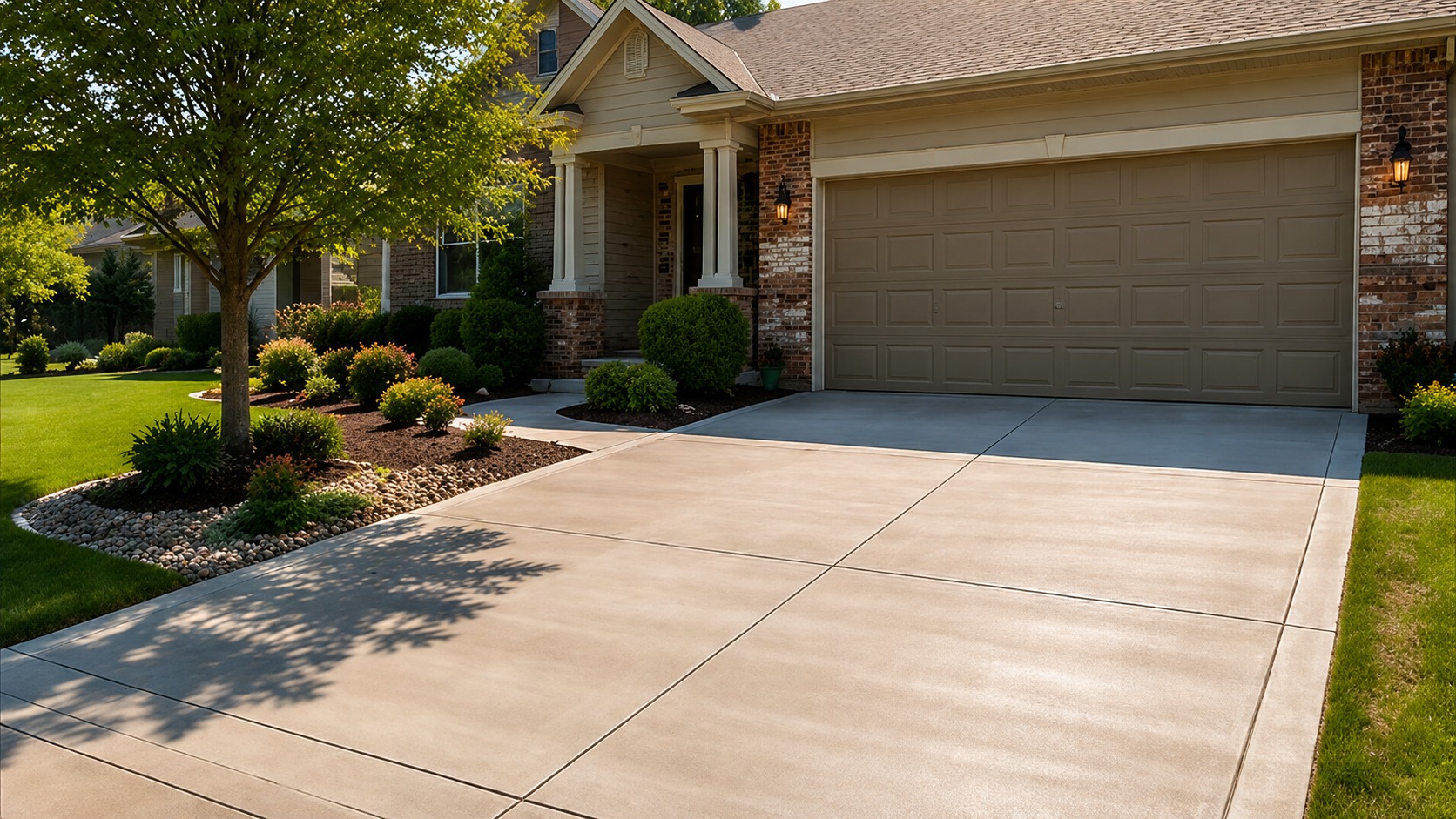
Concrete naturally expands and contracts as temperatures change throughout Missouri's four seasons. Control joints help encourage cracks to occur in planned locations instead of randomly across the slab surface.
While no contractor can guarantee crack-free concrete indefinitely — concrete will crack, and that is a physical reality — proper joint placement and spacing dramatically improves long-term appearance and structural integrity.
- Control joints should be placed every 8–12 feet (depending on slab thickness)
- Expansion joints are needed at garage slabs, sidewalk connections, and transitions
- Proper joint depth is typically one-quarter of the slab thickness
Cheapest Is Rarely the Cheapest
When comparing bids, ask exactly what each quote includes — and what it excludes. Lower prices frequently omit line items that are not optional.
Many homeowners compare only the bottom-line price instead of comparing exactly what each estimate includes. A quote that omits demolition, base material, reinforcement, and sealing can appear $3,000 cheaper while actually delivering far less value.
Items sometimes excluded from lower bids include:
- Demolition and haul-away of the existing driveway
- Additional base material beyond the minimum
- Rebar or fiber reinforcement
- Sealing after cure
- Final cleanup and grading
- Permit costs where required
- Any warranty coverage
Comparing identical scopes of work provides a far more accurate picture than comparing bottom-line pricing alone. Ask each contractor to itemize so you can evaluate apples to apples.
Questions Every Homeowner Should Ask
Before selecting any contractor, ask these eight questions and listen carefully to the answers — they often reveal more than the quoted price.
- How thick will the driveway be?
- What concrete mix design will be used, and what PSI?
- How will the base be prepared?
- Will reinforcement be included — rebar, wire mesh, or fibers?
- How long before vehicles can drive on it?
- What warranty is provided on materials and workmanship?
- Who obtains permits if they are required?
- What maintenance is recommended in the first year and beyond?