
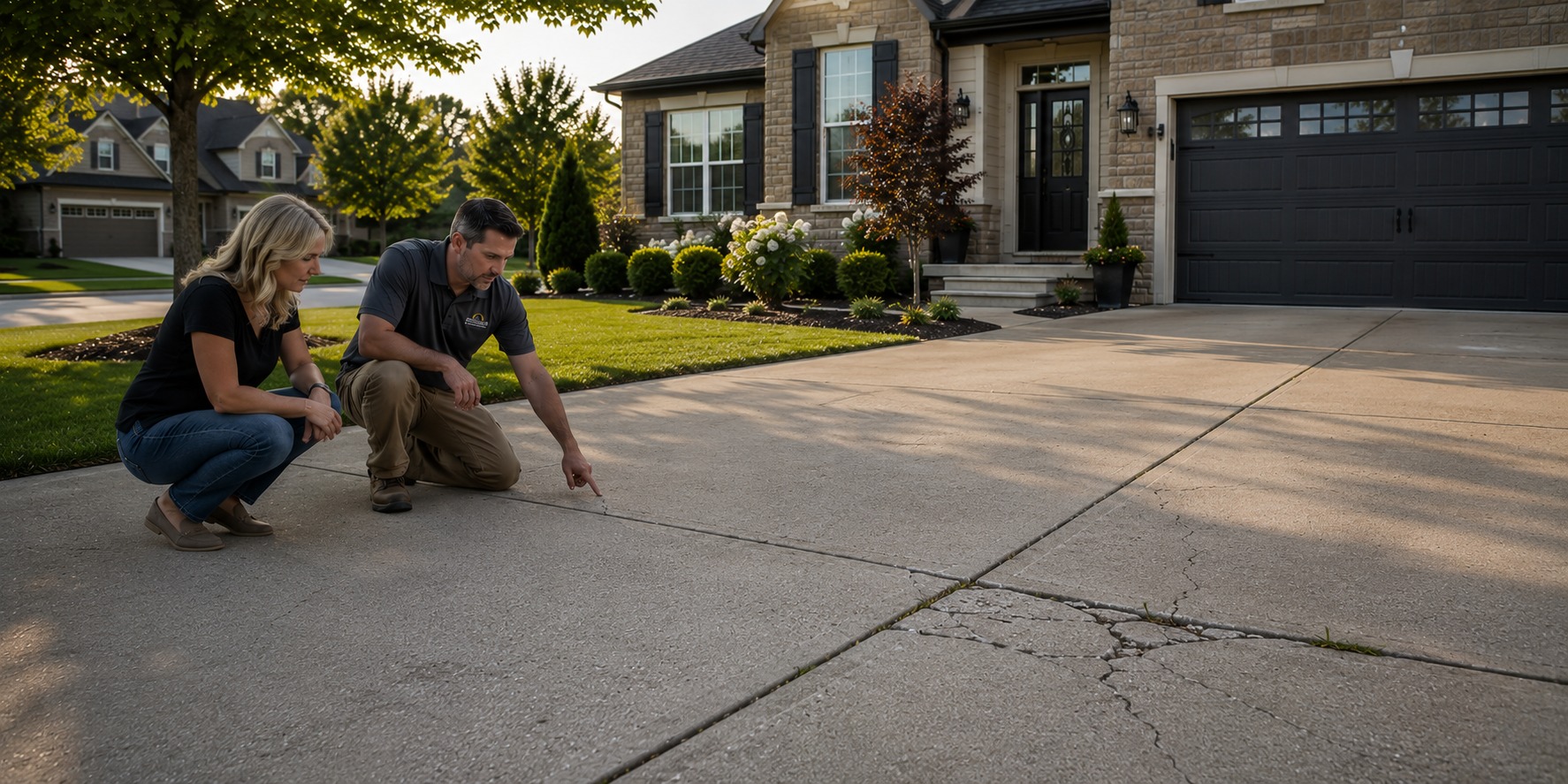
Cracks in a driveway or patio can be unsettling, but they do not always mean you need to replace the entire slab. Many concrete issues can be repaired successfully if they are caught early. On the other hand, waiting too long to address structural problems can lead to more expensive repairs and potential safety concerns.
If you are wondering whether your concrete driveway, patio, sidewalk, or garage floor can be repaired — or whether replacement is the better investment — this guide will help you understand the difference.
For homeowners throughout St. Charles County and the greater St. Louis area, changing seasons, clay soils, and freeze-thaw cycles all play a role in how concrete ages. Knowing what to look for can save money, reduce stress, and help you avoid paying for the wrong solution.
Most cosmetic damage can be repaired — structural damage usually can’t.
Most cosmetic cracks and minor surface damage can often be repaired. However, widespread cracking, significant settling, or uneven slabs usually point to structural issues that make replacement the better long-term solution.
Signs Your Concrete Can Probably Be Repaired
Not every crack is a catastrophe. Concrete naturally expands, contracts, and develops small imperfections over time. In many cases, the damage affects appearance more than structural performance.
You may be a good candidate for repair if you notice:
- Hairline surface cracks
- Small areas of minor chipping or spalling
- Light discoloration or staining
- Isolated cracks that remain level on both sides
- Minor joint deterioration
- Small surface flaws on otherwise stable concrete
These issues can often be addressed without tearing out the entire slab. Crack sealing, surface repair, cleaning, patching, or localized restoration may be enough depending on the condition of the concrete.
Hairline cracks less than 1/8 inch wide that remain level are often cosmetic. Sealing them early can help prevent water intrusion, freeze-thaw expansion, and larger problems later.
When Replacement Is Usually the Smarter Investment
Some concrete problems indicate that the issue extends beneath the surface. In those situations, repairing the visible damage may only provide a temporary improvement.
Replacement is often recommended when you see:
- Multiple large cracks spreading across several slabs
- Uneven or sunken sections creating trip hazards
- Vertical displacement where one slab sits higher than another
- Extensive surface deterioration
- Poor drainage causing ongoing movement
- Repeated repairs that continue to fail
- Concrete that has reached the end of its useful life
These symptoms often point to soil movement, inadequate base preparation, drainage problems, or long-term structural deterioration. Replacing the affected concrete gives the contractor a chance to correct the underlying issue before installing a new slab.
Repair vs. Replace: Quick Comparison
Here’s how common concrete conditions typically shake out when deciding between a repair and a full replacement:
Why Concrete Fails in Missouri
Concrete does not usually fail simply because the concrete itself is “bad.” More often, the problem begins underneath the slab.
In St. Charles County and the surrounding St. Louis area, several factors contribute to premature concrete damage:
- Expansive clay soils that shift with changing moisture levels
- Freeze-thaw cycles during winter months
- Poor drainage allowing water beneath the slab
- Heavy vehicle loads
- Tree roots lifting concrete over time
- Inadequate base preparation during original installation
- Deicing salts and winter moisture exposure
Understanding the cause is just as important as fixing the visible damage. A proper evaluation should determine why the concrete cracked before deciding how to repair it.
The decision is not just “Can this crack be filled?” The better question is: “Will this repair actually last?”
What Happens If You Wait?
Many homeowners postpone repairs because the damage seems minor. Unfortunately, small problems often become much larger ones.
Water enters cracks. Winter freezing expands them. Soil begins washing away beneath the slab. Edges start to crumble. What began as a simple repair can eventually require full replacement.
Addressing damage early usually gives homeowners more options. It can also reduce the chance of trip hazards, drainage issues, and avoidable replacement costs.
Not Every Crack Means Replacement
One of the biggest misconceptions is that any crack means the driveway has reached the end of its life. That is not true.
A concrete contractor will usually evaluate:
- Crack width
- Crack pattern
- Vertical movement
- Age of the concrete
- Drainage conditions
- Overall structural integrity
- Whether the damage is cosmetic or structural
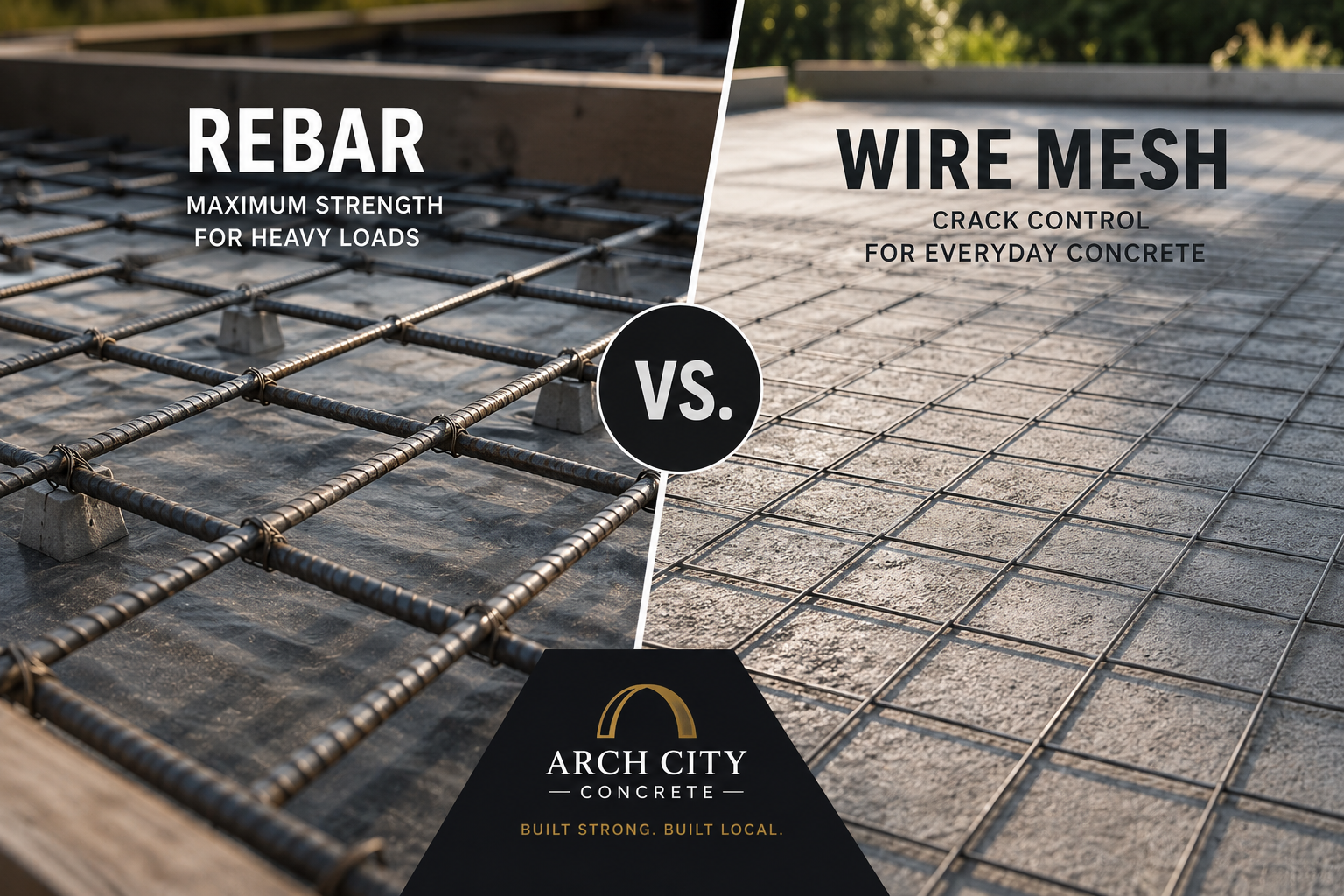
Two driveways with similar-looking cracks may require completely different solutions depending on what is happening beneath the surface. This is one reason reinforcement choices made at the time of the original pour matter so much down the road.
Homes throughout St. Peters, O’Fallon, Wentzville, Lake St. Louis, and St. Charles often sit on expansive clay soils that shift as moisture levels change through the seasons. That movement is a common reason repairs on one section of a driveway don’t always solve the problem for the whole slab.
The Bottom Line
The best solution depends on the condition of your concrete, not just how it looks from the curb.
Minor cosmetic damage can often be repaired successfully. Structural movement, widespread cracking, or repeated failure usually makes replacement the better long-term investment.
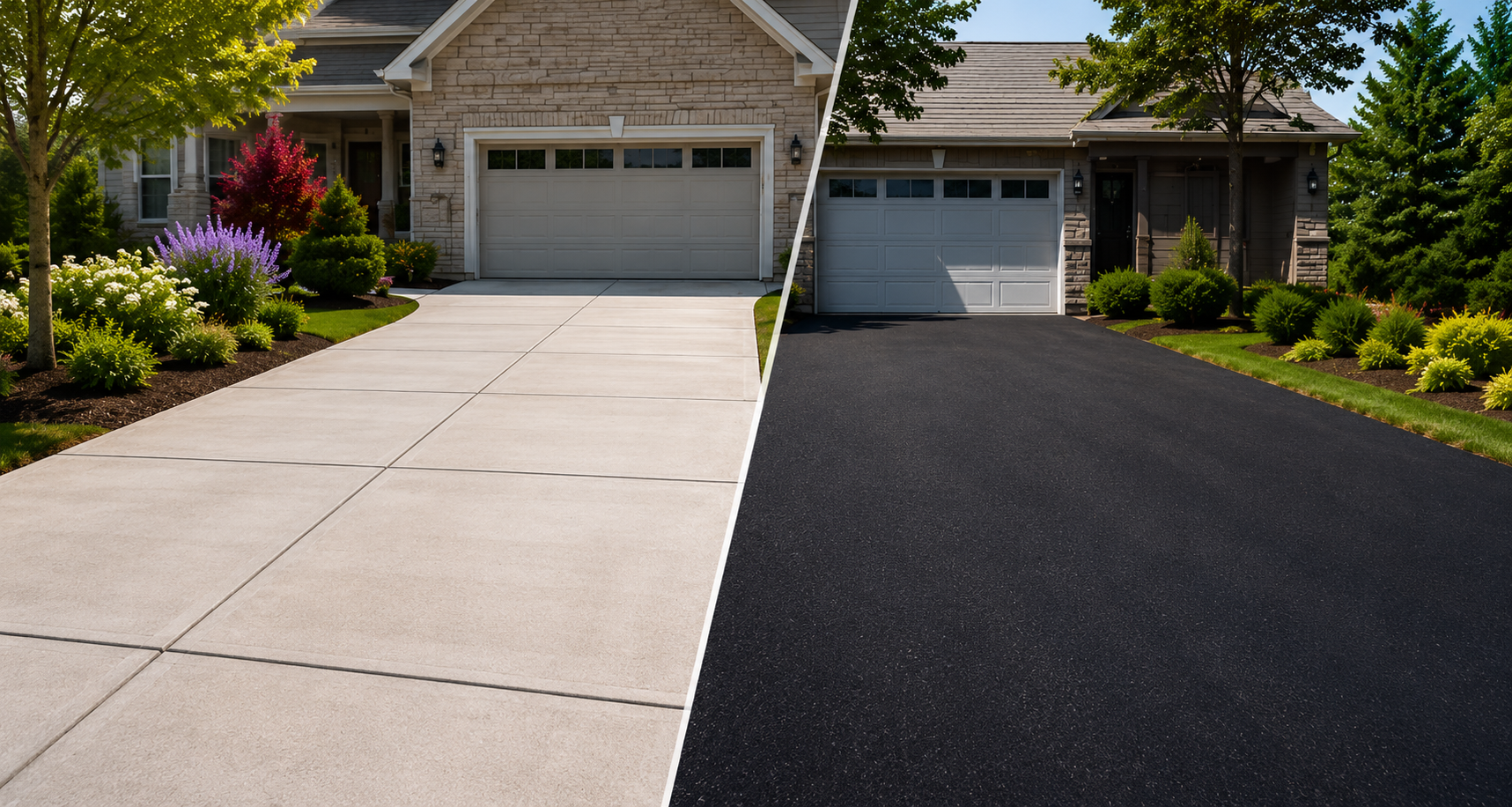
If you are unsure which category your driveway, patio, sidewalk, or slab falls into, a professional evaluation can help you make an informed decision before the damage worsens. It’s also worth thinking ahead — our guides on what a concrete driveway costs and concrete vs. asphalt can help you plan if replacement turns out to be the right call.