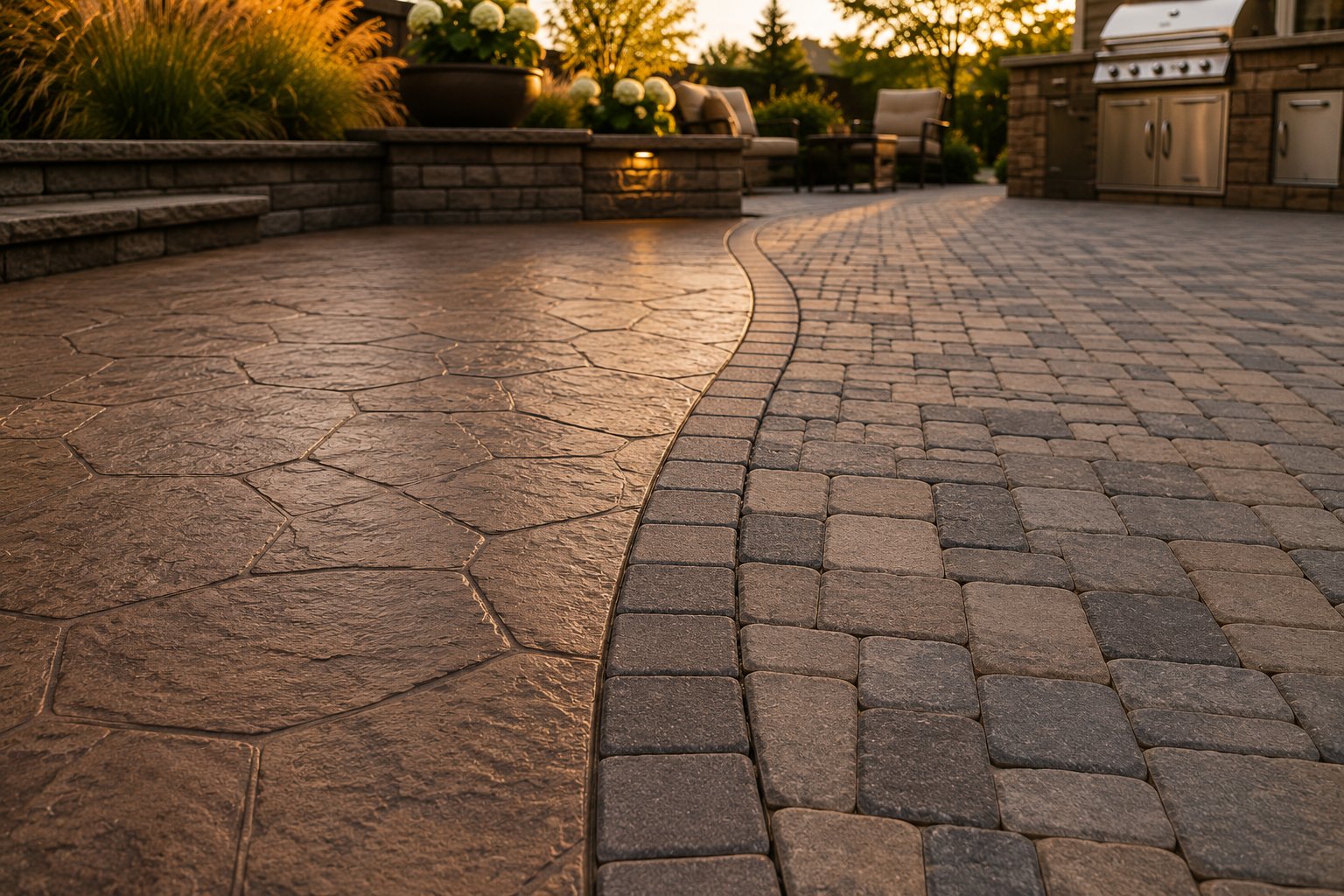
Walk through almost any newer subdivision in St. Charles County and you'll notice something interesting: outdoor living spaces have become just as important as kitchens and family rooms. Backyard patios now serve as dining rooms, fire pit gathering areas, outdoor kitchens, and entertainment spaces that families use nearly year-round.
As homeowners invest more into these spaces, one question comes up repeatedly: Should I choose stamped concrete or pavers? This guide will help you understand which option makes the most sense for your home and your budget.
Both stamped concrete and pavers can create beautiful patios and walkways — but they are very different products, each with its own strengths, weaknesses, maintenance requirements, and long-term costs.
What Is Stamped Concrete?
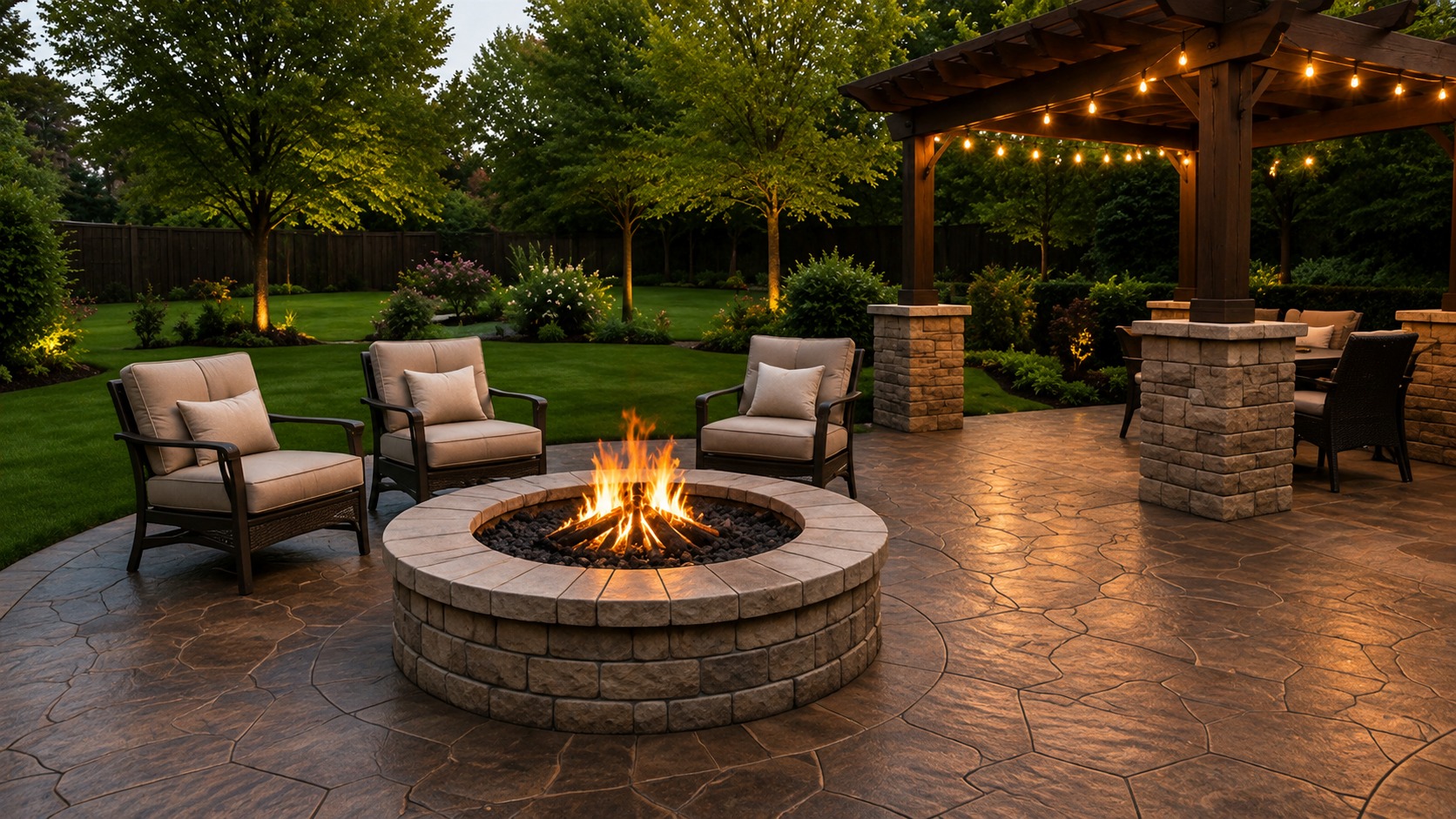
Stamped concrete begins as a traditional poured concrete slab. Before the concrete hardens, installers press specialized rubber stamps into the surface, creating textures that mimic natural slate, flagstone, brick, cobblestone, wood planks, and dozens of other premium materials.
Color hardeners and stains are then incorporated into the finish to create rich, natural-looking variations that closely resemble real stone. The result is a continuous decorative surface that combines the strength of concrete with the appearance of much more expensive materials.
Many homeowners are surprised to learn that what looks like handcrafted stone is often a single poured slab. Stamped concrete can achieve the appearance of natural stone at a fraction of the cost of premium masonry.
What Are Concrete Pavers?
Pavers take a completely different approach. Instead of one continuous slab, hundreds of individual concrete blocks are installed by hand over a carefully compacted gravel base and bedding sand. The finished surface contains numerous joints between each piece, allowing slight movement without creating large cracks.
Pavers come in an enormous variety of shapes, textures, and colors, making them a popular choice for traditional patios, driveways, walkways, and pool decks. Because each unit is separate, repairs can often be made by replacing only individual stones instead of an entire section.
Appearance: Which Looks Better?
Beauty is subjective, but there are clear differences in the overall style each material creates.
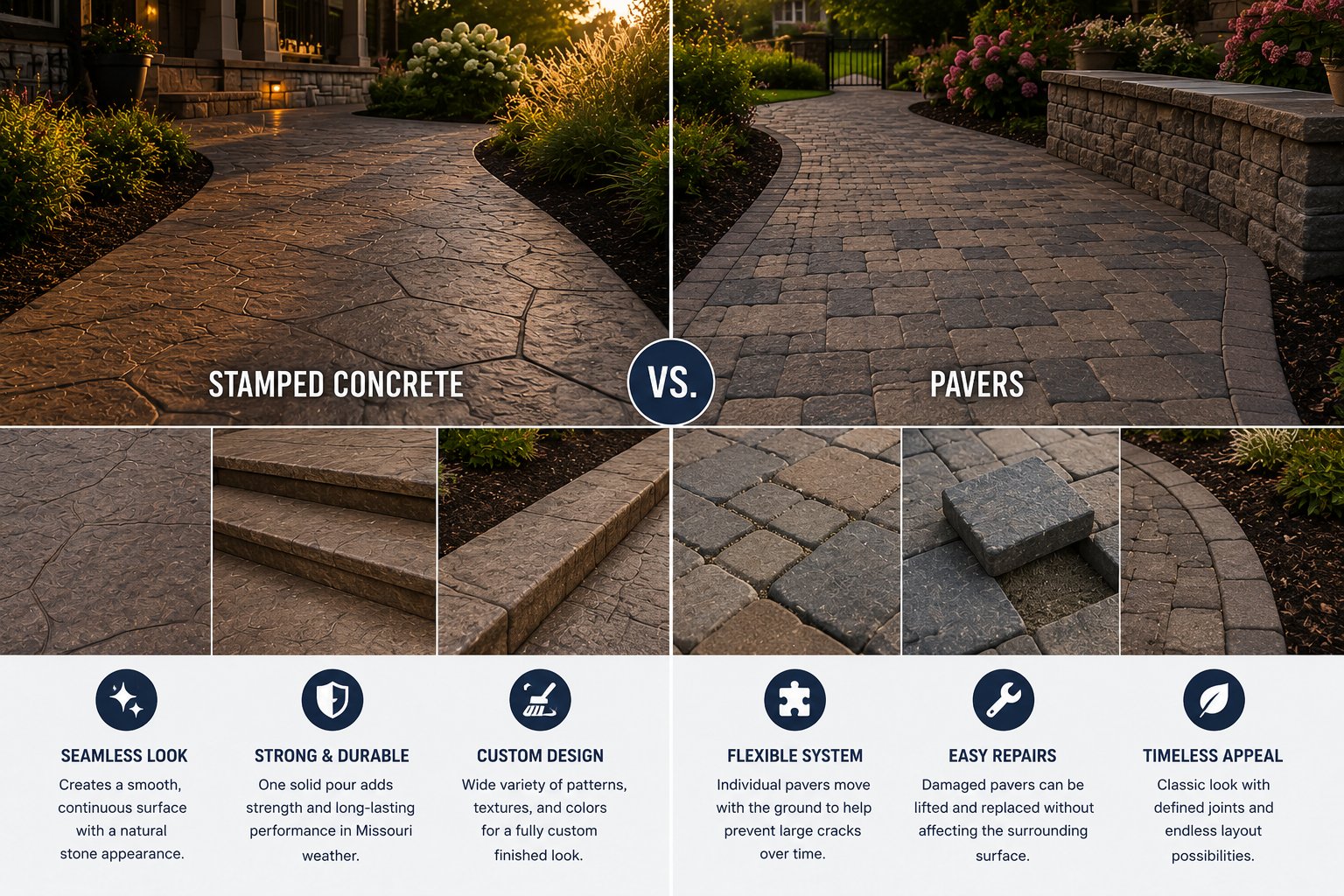
Stamped concrete offers a seamless, elegant appearance with large flowing patterns that resemble natural stone or slate. Modern coloring techniques can create remarkable depth and realism, making it difficult for many visitors to distinguish stamped concrete from premium masonry.
Pavers, by comparison, create more visual texture because every unit is individually defined. The joint lines become part of the design, producing a timeless appearance that works particularly well with traditional architecture.
- Clean, contemporary lines → stamped concrete often feels more refined
- Old-world charm and visible masonry detail → pavers may be more appealing
- Budget-conscious premium look → stamped concrete delivers the most visual value
- Modular, replaceable surface → pavers offer greater long-term flexibility
Cost Comparison
For many homeowners, cost becomes the deciding factor. Although pricing varies depending on design complexity and site conditions, stamped concrete generally costs less than professionally installed pavers.
Because stamped concrete is installed as one continuous pour, pavers require excavation, gravel installation, sand bedding, edge restraints, individual placement, cutting, compacting, and joint sand installation — making labor costs significantly higher. For larger patios, the price difference can become substantial.
Stamped concrete often provides a luxury appearance while remaining one of the most cost-effective decorative hardscape options available in St. Charles County. Request quotes from local professionals to compare accurately for your specific project and site.
Missouri Weather Matters More Than You Think
Missouri's climate creates unique challenges for outdoor surfaces. Winter freeze-thaw cycles, spring rains, summer heat, humidity, and expansive clay soils all place stress on patios and walkways.
Concrete naturally expands and contracts with temperature changes. While properly installed control joints help manage movement, small hairline cracks can develop over many years of service. Pavers handle expansion differently — because every block is independent, the surface can flex with ground movement rather than cracking as one large slab. However, pavers can settle unevenly over time if the base beneath them shifts, creating areas that may require leveling.
For either system, installation quality is ultimately more important than material selection. A properly prepared foundation often determines whether a patio lasts ten years or thirty.
Maintenance Requirements
Every outdoor surface requires maintenance — the question is simply what kind.
Stamped concrete should be cleaned periodically and resealed every few years to preserve its color and protect against moisture intrusion, stains, and surface wear. Fortunately, resealing is relatively inexpensive and helps maintain the patio's appearance for decades.
Pavers require a different type of upkeep. Joint sand can wash away over time, weeds may occasionally emerge between stones, and settling areas sometimes need to be lifted and releveled. Neither material is maintenance-free, but most homeowners find stamped concrete easier to maintain over the long term.
Repairs and Long-Term Ownership
One advantage pavers hold is repair flexibility. If utility work, tree roots, or settlement damage a section of the patio, individual pavers can usually be removed and replaced. Stamped concrete is less forgiving — large repairs often remain visible because matching aged concrete color and texture perfectly is difficult. Fortunately, major repairs are relatively uncommon when the slab is installed correctly with proper drainage and reinforcement.
Slip Resistance and Safety
Many homeowners worry that decorative concrete becomes slippery. When properly finished and sealed with a slip-resistant additive, stamped concrete provides excellent traction for patios and pool decks. Pavers also offer good traction due to their textured surfaces and joint lines. Around swimming pools or areas frequently exposed to water, both products perform well when professionally installed.
Which Adds More Value to a Home?
Outdoor living spaces continue to rank among the most desirable home improvements for buyers. An attractive patio extends usable living space, improves curb appeal, and creates a stronger first impression.
Stamped concrete often delivers exceptional value because it creates an upscale appearance without the premium installation costs associated with natural stone. Pavers may appeal to buyers seeking luxury landscaping features and modular repairability. Either option can increase property value when thoughtfully designed and professionally installed.
So Which Would We Choose?
There isn't a universal answer. For homeowners seeking the best balance of beauty, durability, affordability, and low maintenance, stamped concrete is often the stronger overall value. It provides remarkable design flexibility while delivering decades of service with relatively modest upkeep.
Pavers remain an excellent premium option for homeowners who appreciate their traditional appearance and the ability to replace individual stones if necessary. The right choice depends on your design goals, your budget, and how you plan to use your outdoor space.