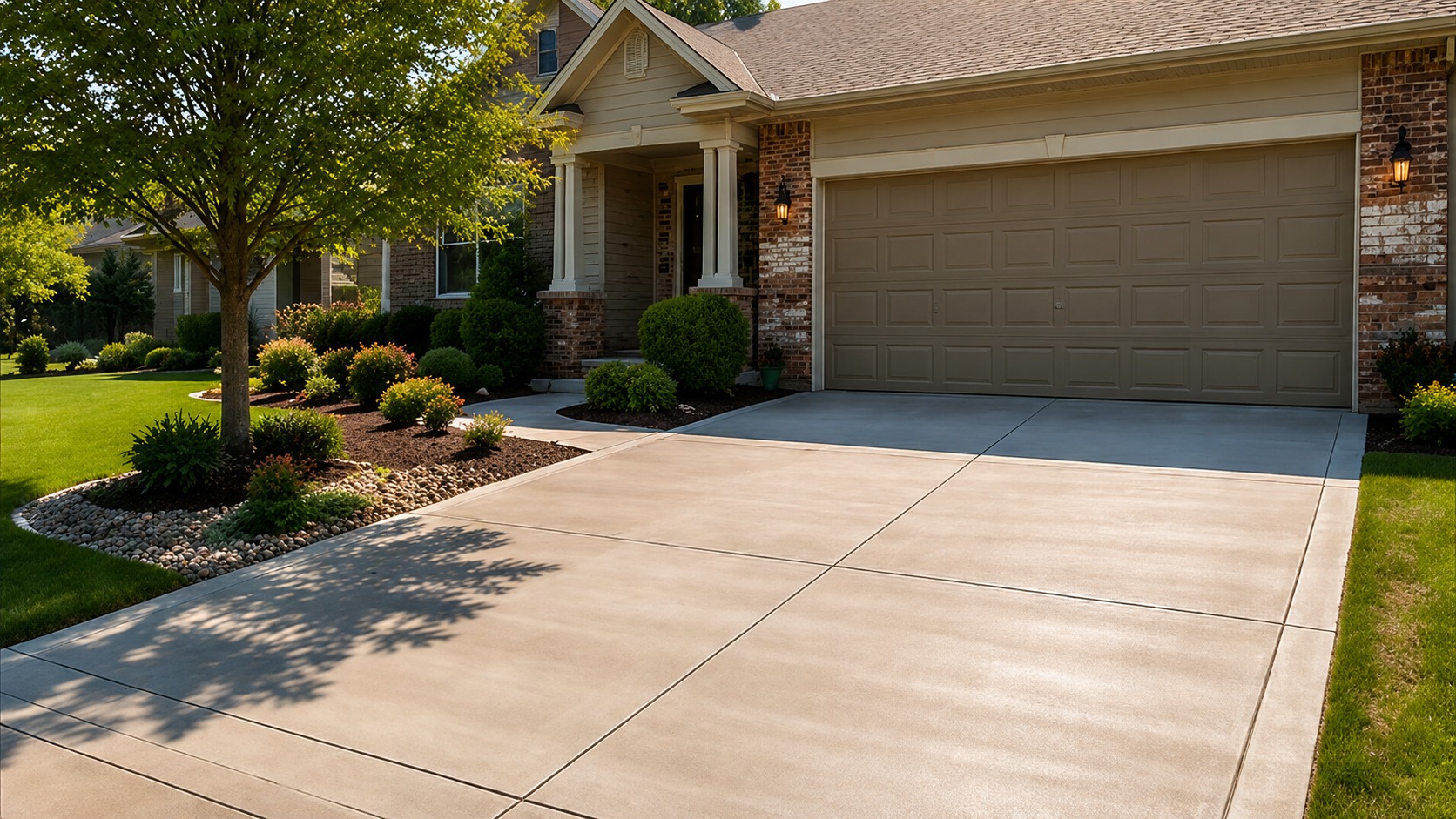
If you’re investing in a new concrete driveway, patio, or slab, what’s beneath the surface matters just as much as the concrete itself. Both rebar and wire mesh reinforce concrete — but they are not equal. Understanding the difference can help you make a more confident decision before signing any contract.
For most residential projects, rebar is the stronger choice.
For most residential concrete projects, rebar provides greater strength, durability, and long-term performance than wire mesh. That doesn’t mean wire mesh is obsolete — in lighter-duty applications it can still be practical. But if you’re comparing strictly on strength and longevity, rebar generally comes out ahead.
Concrete Is Strong—But Not Invincible
Concrete has a reputation for being nearly indestructible. Walk through any neighborhood and you’ll find driveways, sidewalks, and patios that have been around for decades.
What many homeowners don’t realize, however, is that concrete has one significant weakness: it’s exceptionally strong under compression but relatively weak when stretched, bent, or subjected to movement.
As temperatures change, soil expands and contracts, and vehicles place stress on a slab, those forces create tension within the concrete. That’s where reinforcement becomes critical.
- Controls cracking and limits crack width over time
- Distributes loads more evenly across the slab
- Improves structural integrity under heavy use
- Reduces movement-related damage from soil shift
- Extends the service life of the finished surface
Think of reinforcement as the hidden framework that helps concrete handle the stresses of everyday life — the steel that keeps the slab from becoming a collection of disconnected chunks.
What Is Wire Mesh?
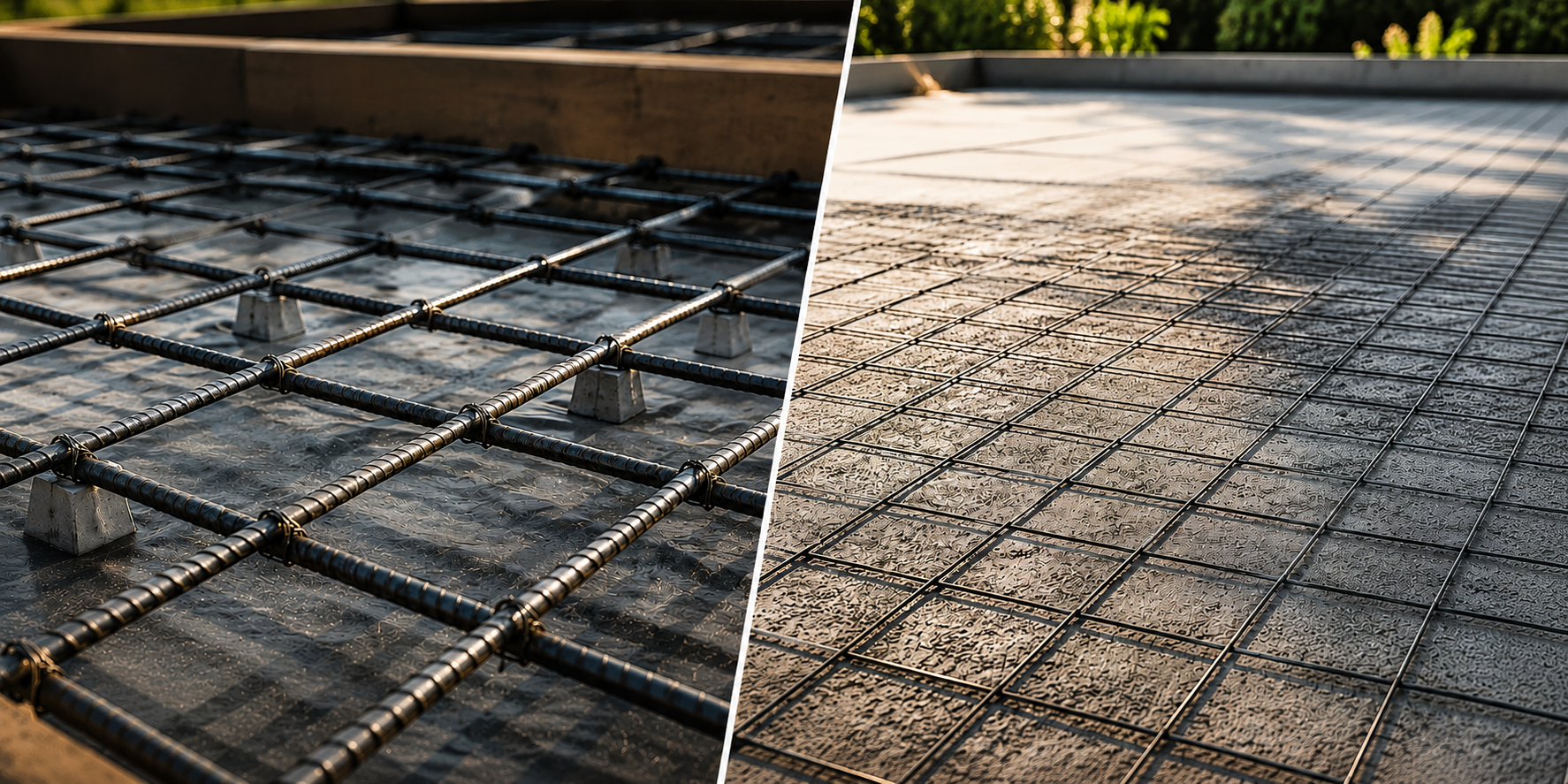
Wire mesh is exactly what it sounds like: a grid of welded steel wires placed inside concrete before it’s poured. For decades, wire mesh has been used in residential and commercial construction because it’s relatively affordable and easy to install.

Where Wire Mesh Is Commonly Used
- Residential sidewalks and small walkways
- Garden paths and decorative concrete surfaces
- Utility slabs and storage shed pads
- Light-duty concrete installations
Wire mesh only works effectively when it’s positioned correctly within the slab. If it settles to the ground during installation — a surprisingly common issue on job sites — its reinforcing benefits can be significantly reduced. The mesh has to be elevated where it can actually do its job.
What Is Rebar?
Rebar, short for reinforcing bar, is a steel rod specifically designed to strengthen concrete structures. Rather than forming a thin welded grid, rebar creates a stronger internal framework capable of handling much greater loads and stress.
Contractors typically arrange rebar in a grid pattern and elevate it within the slab so it remains positioned where it can provide maximum reinforcement throughout the concrete.
Where Rebar Is Commonly Used
- Concrete driveways and garage floors
- RV parking pads and heavy-use surfaces
- Large patios and outdoor entertainment areas
- Retaining walls and structural slabs
- Pool decks and commercial concrete projects
Rebar is typically the preferred choice for driveways, larger patios, garage floors, and concrete surfaces expected to handle significant weight or movement over time.
Rebar vs. Wire Mesh: Side-by-Side
Here’s how the two reinforcement methods stack up across the factors that matter most to homeowners:
When Wire Mesh Makes Sense
Not every concrete project requires maximum reinforcement. For smaller residential applications, wire mesh may provide adequate performance while keeping project costs lower.
- Residential sidewalks and backyard walkways
- Decorative concrete paths with light foot traffic
- Storage shed pads and utility slabs
- Small patios that won’t support vehicle weight
If the slab won’t experience significant weight loads and soil conditions are stable, wire mesh may be sufficient. The key is understanding the demands that will realistically be placed on the finished surface over its lifetime.
When Rebar Is Worth the Investment
There are situations where rebar’s advantages become difficult to ignore. If the slab will regularly support vehicles, heavy equipment, or substantial foot traffic, stronger reinforcement almost always makes sense.
- Concrete driveways that support passenger vehicles
- RV parking pads and surfaces for heavier trucks
- Garage floors and heavy-use indoor slabs
- Pool decks and large outdoor entertainment patios
- Any surface where long-term durability is a priority
The upfront cost difference between rebar and wire mesh is often relatively small compared to the total project cost. And it’s considerably smaller than what it would cost to repair or replace a failed slab years later. When evaluating bids, ask contractors to explain the reinforcement included — and why.
What St. Charles County Homeowners Should Know About Soil Movement
One factor that doesn’t get enough attention is what’s happening beneath the concrete. St. Peters, O’Fallon, Wentzville, Lake St. Louis, and St. Charles homeowners often deal with clay-rich soils that naturally expand when wet and contract during dry periods. Over time, this movement places real stress on driveways, patios, and slabs.
Add Missouri’s freeze-thaw cycles to the equation, and concrete surfaces can experience a surprising amount of movement throughout the year — stresses that accumulate and compound over time.
Many newer subdivisions throughout St. Charles County were built on expansive clay soils. Proper reinforcement won’t prevent every crack — no reinforcement can — but it can significantly improve how concrete performs as the ground naturally shifts through Missouri’s seasons. That’s one reason many experienced local contractors recommend rebar for larger residential projects in this region.
Questions to Ask Before Any Concrete Project
Before signing a contract, a few direct questions can tell you a lot about the quality of work you’re getting. A professional contractor should be comfortable answering all of them:
- Will reinforcement be included in this project?
- Will rebar or wire mesh be used — and why?
- How will the reinforcement be elevated and positioned within the slab?
- Is reinforcement included in the quoted price, or is it an add-on?
- What is the expected service life of this slab with the reinforcement you’re recommending?
Hesitation or vague answers on these questions are worth paying attention to. The decision you make now — or the decision your contractor makes for you — determines how the finished surface performs years down the road.
For many St. Charles County homeowners, the decision ultimately comes down to balancing upfront cost against long-term value. And when it comes to concrete, what’s hidden beneath the surface often determines how well the finished project holds up.
The Bottom Line
Both rebar and wire mesh play legitimate roles in concrete construction. Wire mesh remains a practical choice for lighter-duty applications and can provide meaningful crack control when installed correctly.
For driveways, larger patios, garage floors, and slabs expected to withstand significant stress — especially in St. Charles County’s clay-rich soils and through Missouri’s freeze-thaw seasons — rebar generally delivers greater strength, better durability, and improved long-term performance.
While you’re considering your project, it’s also worth thinking through surface choices. Our guide on stamped concrete vs. pavers covers another common decision homeowners face when planning outdoor surfaces.