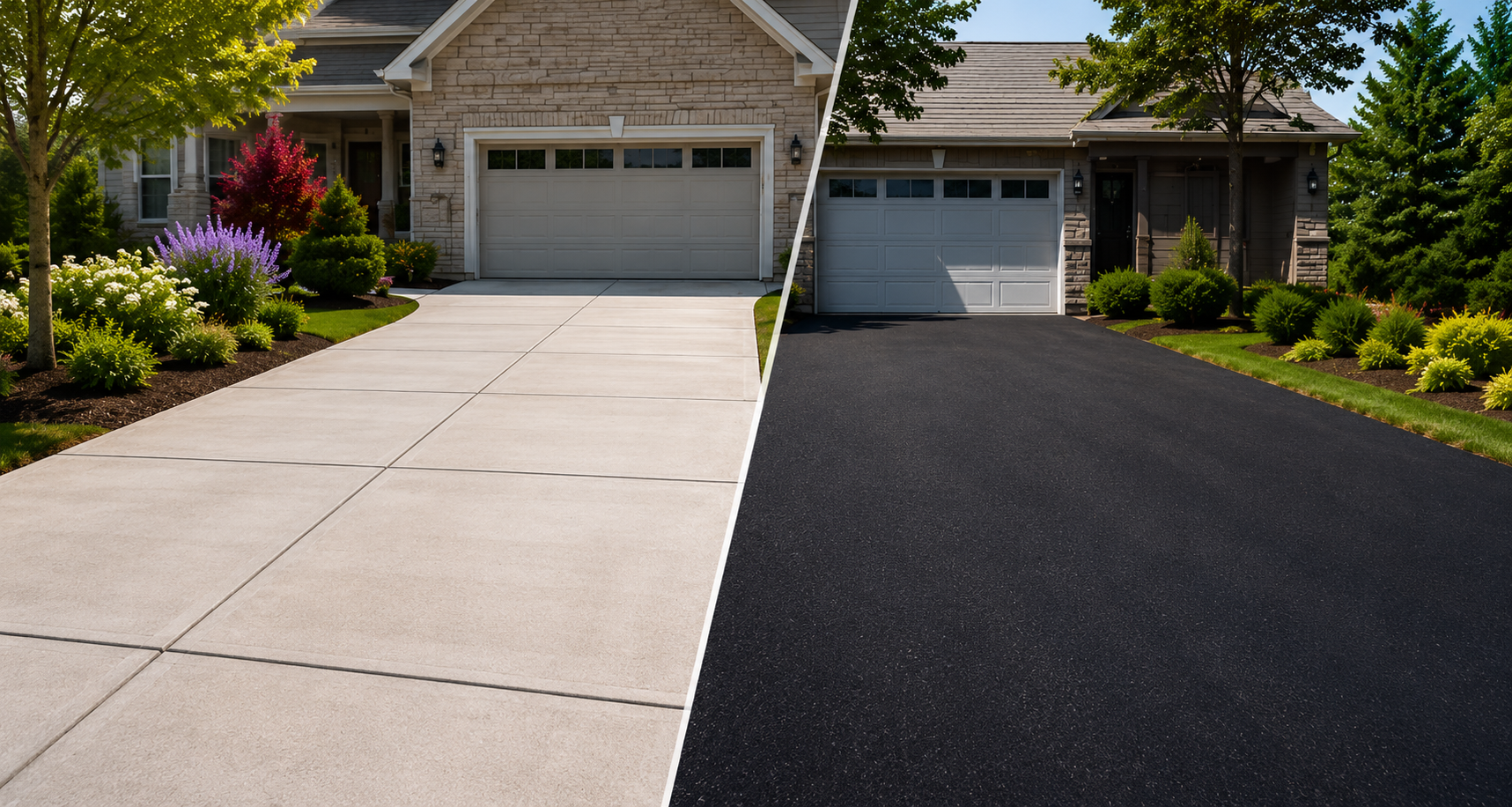
Your driveway is one of the first things people notice about your home—and one of the hardest-working surfaces on your property. When it’s time to replace it, one of the biggest decisions you’ll face is choosing between concrete and asphalt. Both options can deliver excellent results when installed correctly. But they have different strengths, weaknesses, costs, and long-term maintenance needs.
Here’s a straightforward comparison to help you make the best choice for your home and your budget.
Concrete vs. Asphalt: At a Glance
| Factor | Concrete | Asphalt |
|---|---|---|
| Upfront Cost | Higher | Lower |
| Lifespan | 30–50+ years | 15–25 years |
| Maintenance | Low | Moderate (sealing required) |
| Heat Resistance | High | Lower (softer in extreme heat) |
| Cold Weather | Excellent | Good (may soften & expand) |
| Appearance Options | Wide range (finishes, colors, stamped) | Limited (standard black) |
| Environmental Impact | Lower (longer life, less upkeep) | Higher (more frequent maintenance) |
| Best For | Long-term homes, curb appeal, durability | Budget-conscious projects, short-term plans |
Concrete Driveways: Pros & Cons
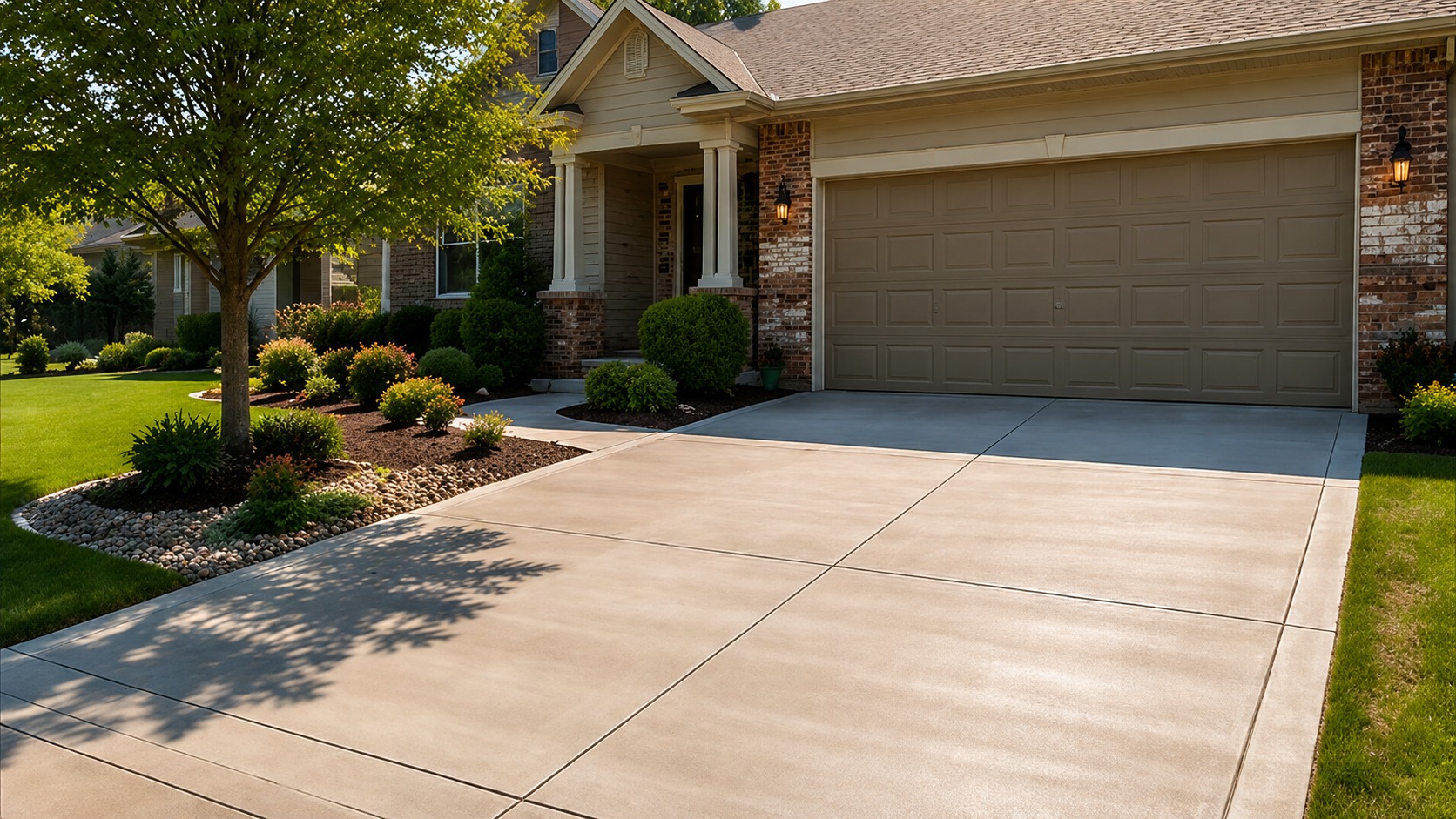
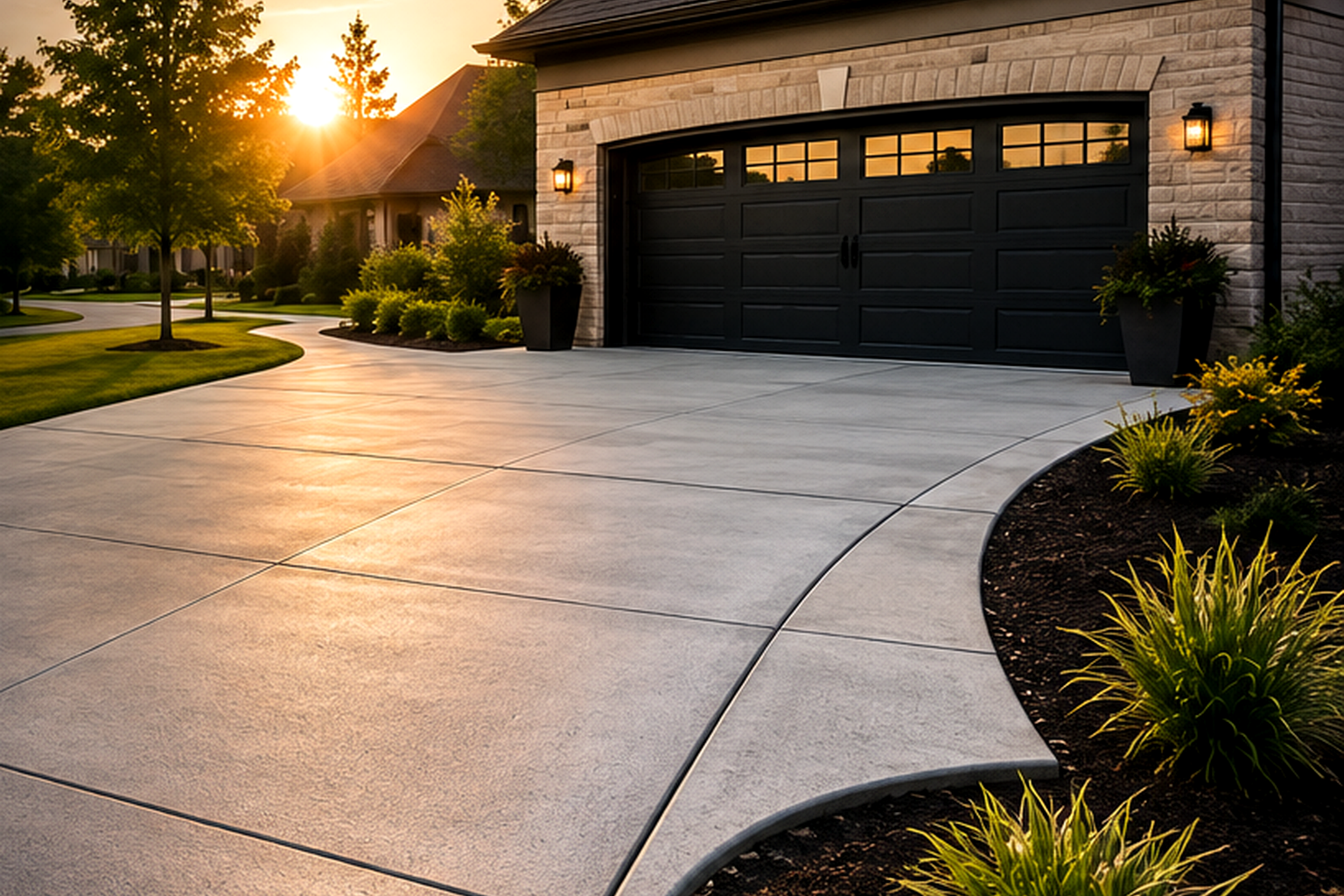
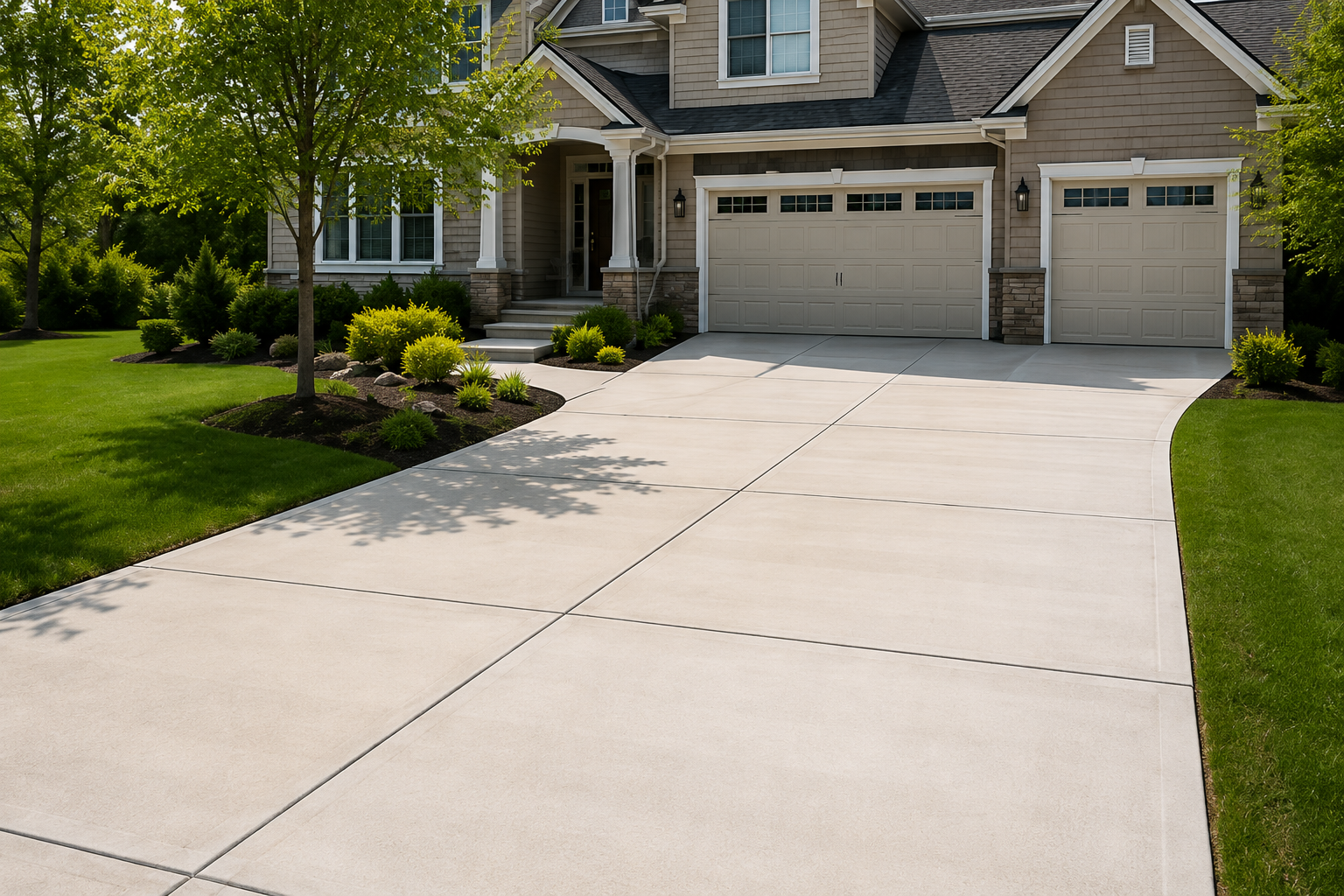
Concrete is a premium choice for homeowners who value durability, long-term value, and curb appeal. It’s a popular option in St. Charles County—and for good reason. When installed properly, a concrete driveway can last for decades with minimal maintenance.
- Exceptional longevity (30–50+ years)
- Low maintenance requirements
- Withstands heat and UV exposure
- Wide variety of design options (colors, finishes, stamped, borders)
- Boosts curb appeal and home value
- Does not soften in summer heat
- Higher upfront cost than asphalt
- Longer curing time before use
- Deicing salts can damage the surface
- Cracks can be more visible if they develop
- Requires professional installation for best results
If you’re planning to stay in your home for ten years or more, concrete’s lower lifetime maintenance costs often make it the smarter long-term investment—even with a higher price tag at installation. Explore what goes into quality concrete in our guide to Choosing the Right Concrete Driveway.
Cost Comparison
Concrete typically costs more upfront than asphalt for a comparable driveway. The difference varies depending on size, site conditions, local material costs, and the level of finish you choose.
However, cost comparisons rarely tell the full story. Asphalt driveways require regular sealing every few years, and a properly maintained asphalt surface may still need resurfacing or replacement significantly sooner than a well-built concrete driveway. Over a twenty- or thirty-year period, the total cost of ownership can look very different from the initial price tags.
For a deeper look at what really drives driveway pricing, see our guide on How Much Does a Concrete Driveway Cost?
When comparing costs, think in decades rather than years. A $3,000–$5,000 savings at installation can disappear quickly if sealing, patching, and early resurfacing costs are factored in over a fifteen-year period.
Longevity & Maintenance
Concrete driveways are widely known for their longevity. A properly installed concrete driveway in St. Charles County can realistically last thirty to fifty years or more with routine care. Asphalt driveways, while less expensive at installation, typically have a shorter lifespan of fifteen to twenty-five years and require ongoing maintenance to reach that range.
For asphalt, sealing is not optional—it’s necessary. Homeowners should expect to reseal an asphalt driveway every two to five years to protect it from UV degradation, water infiltration, and surface cracking. Concrete, by comparison, benefits from occasional sealing but does not depend on it for structural survival.
Neither material is entirely maintenance-free. Concrete should be cleaned periodically and protected from prolonged exposure to deicing salts during winter. But the maintenance burden for concrete is generally lower and less time-sensitive than for asphalt.
Appearance & Curb Appeal
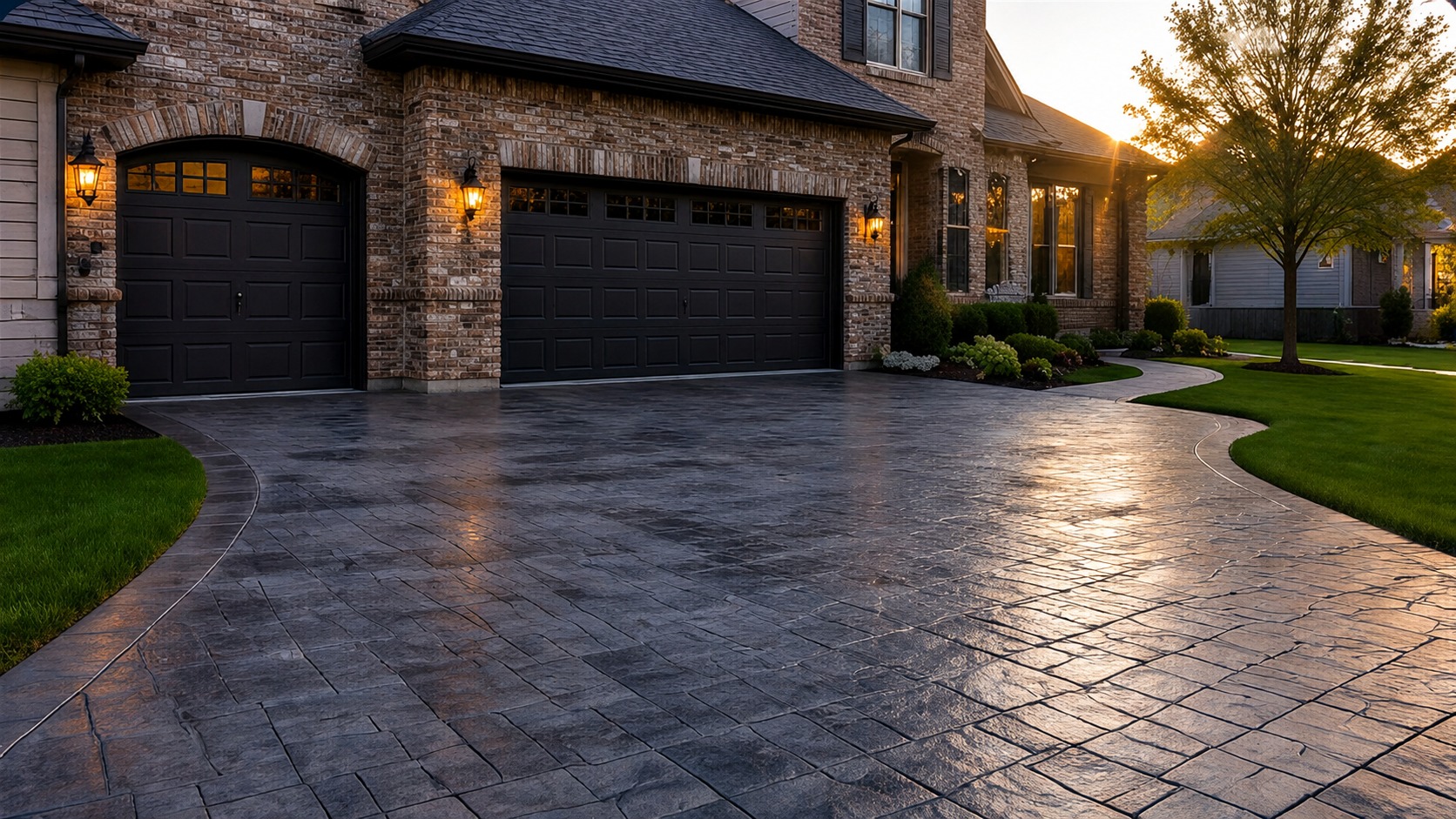
When it comes to design flexibility, concrete has a clear advantage. It can be finished smooth, exposed aggregate, brushed, stamped, stained, or colored in a wide range of shades and patterns. Decorative concrete driveways can mimic stone, brick, slate, or tile—adding significant curb appeal and personalization to the front of a home.
Asphalt offers a clean, uniform appearance in standard black. While some homeowners appreciate the crisp, minimalist look of a freshly sealed asphalt driveway, it offers little in the way of customization. If curb appeal, resale value, and visual distinction are priorities, concrete is the stronger choice. For inspiration on what’s possible with decorative finishes, see our guide on Stamped Concrete vs. Concrete Pavers.
Climate & Performance in St. Charles County
St. Charles County homeowners deal with both extremes: hot, humid Missouri summers and winters that bring freezing temperatures, ice, and snow. Both materials can perform well in this climate, but they respond to weather differently.
Concrete handles heat exceptionally well. It does not soften or become tacky in summer temperatures the way asphalt can. However, concrete requires thoughtful deicing practices in winter—calcium chloride or sand is preferable to rock salt, which can damage the surface over time.
Asphalt is more flexible by nature, which gives it some resistance to freeze-thaw cracking. However, in prolonged hot weather, asphalt can soften and leave impressions from vehicle tires or lawn equipment. In Missouri’s summer heat, this is worth considering.
For a concrete driveway that holds up well in our local climate, slab thickness and base preparation matter as much as the material itself. Our guide on How Thick Should a Concrete Driveway Be? explains how these decisions affect long-term performance.
Both concrete and asphalt can perform well in Missouri’s climate—but the one that performs better over time depends on how it’s installed, how it’s maintained, and what you’re optimizing for.
Asphalt Driveways: Pros & Cons
Asphalt is a practical, cost-effective material that has served homeowners well for generations. For budget-conscious projects or situations where long-term plans are uncertain, asphalt offers real advantages.
- Lower upfront installation cost
- Faster installation and curing
- Flexible—less prone to cracking from ground movement
- Easier to repair individual sections
- Familiar, classic look
- Shorter lifespan (15–25 years)
- Requires regular sealing (every 2–5 years)
- Softens in extreme summer heat
- Limited design and color options
- Higher long-term maintenance costs
Whichever material you choose, the quality of the base preparation and reinforcement determines how well your driveway performs over time. For concrete, see our guide on Rebar vs. Wire Mesh for Concrete to understand how reinforcement choices affect durability and longevity.
Which One Is Right for You?
The best driveway material depends on your specific situation. There is no universal right answer—only the right answer for your home, your budget, and your long-term goals.
Concrete may be the better fit
- You plan to stay in your home for ten or more years
- Curb appeal and home value are priorities
- You want design flexibility (colors, finishes, stamped patterns)
- You prefer low, predictable maintenance
- You live in an area with hot summers and want a surface that won’t soften
- You value long-term cost efficiency over lowest upfront price
Asphalt may be worth exploring
- Budget is the primary constraint right now
- You may move in the next five to ten years
- You need the driveway ready to use quickly after installation
- The traditional black driveway look fits your home’s aesthetic
- You’re comfortable with periodic sealing and maintenance
Final Thoughts
Concrete and asphalt are both legitimate driveway materials. The right choice comes down to your timeline, your budget, your aesthetic preferences, and how much ongoing maintenance you want to take on.
For most homeowners in St. Charles County who plan to stay in their homes and value long-term performance, concrete offers a compelling combination of durability, low maintenance, and design flexibility that asphalt simply cannot match. But for homeowners focused on upfront budget or short-term plans, asphalt remains a practical and widely available option.
Whatever direction you choose, quality installation makes the biggest difference in how either material performs. A well-built asphalt driveway will outperform a poorly built concrete one every time. Ask the right questions, understand what’s included in each estimate, and choose a contractor who prioritizes proper base preparation and workmanship.
If you’re still exploring your options, our Learning Center has additional guides covering Choosing the Right Concrete Driveway, How Much Does a Concrete Driveway Cost?, How Thick Should a Concrete Driveway Be?, Stamped Concrete vs. Concrete Pavers, and Backyard Patio Ideas.