Most cracks are simply part of how concrete cures — not a sign of failure.
Most concrete cracks form because concrete naturally shrinks while curing, expands and contracts during Missouri’s freeze-thaw cycles, or moves with the soil beneath it. Hairline cracks are often normal, while wider or uneven cracks may indicate structural movement that deserves professional evaluation.
Concrete is one of the strongest and most durable building materials available, so it’s easy to assume a properly poured slab should stay perfectly smooth for decades. In reality, almost every concrete driveway, patio, or sidewalk will develop at least a few small cracks over its lifetime — often within the first year or two. That surprises a lot of homeowners, especially after paying for a brand-new installation.
The good news is that most cracking is completely normal and has nothing to do with poor workmanship. The key is understanding which cracks are simply part of how concrete cures and ages, and which ones are trying to tell you something more serious is happening underneath.
This guide breaks down the real causes of concrete cracking, walks through the most common crack types homeowners in St. Charles County and the greater St. Louis area run into, and explains when a crack is worth a closer look.
Common Causes of Concrete Cracking
Concrete is exceptionally strong under compression, but relatively weak when stretched or bent. As the slab cures, dries, and reacts to the ground beneath it, small tensile forces build up. Once those forces exceed what the concrete can handle, a crack forms.
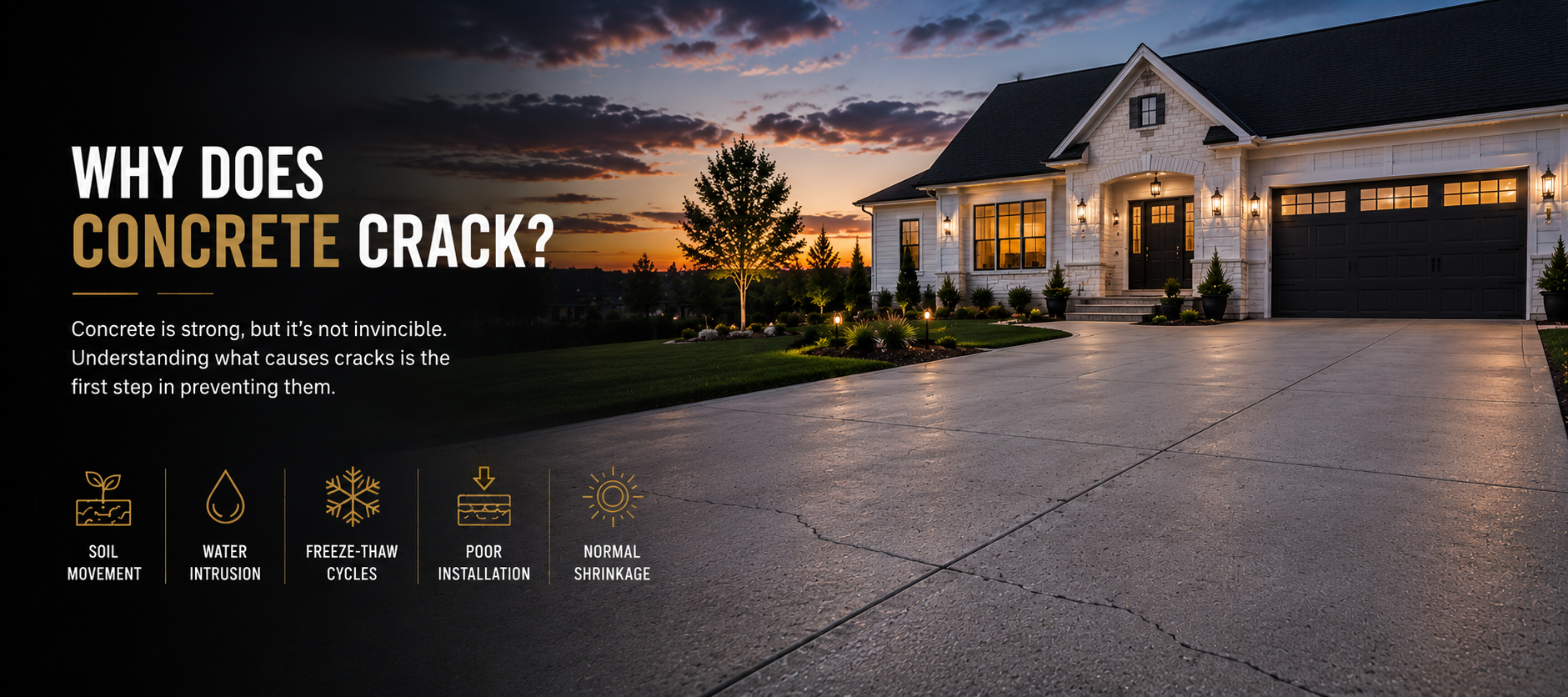
The most common causes homeowners encounter include:
- Normal shrinkage — as concrete cures, it naturally loses moisture and shrinks slightly
- Freeze-thaw cycles — repeated freezing and thawing causes the slab to expand and contract
- Soil movement — shifting, settling, or expanding soil beneath the slab puts stress on the concrete above it
- Water intrusion — water weakens the soil beneath the slab and can accelerate erosion and expansion
- Poor installation — inadequate base preparation, missing control joints, or too much water in the mix all increase cracking risk
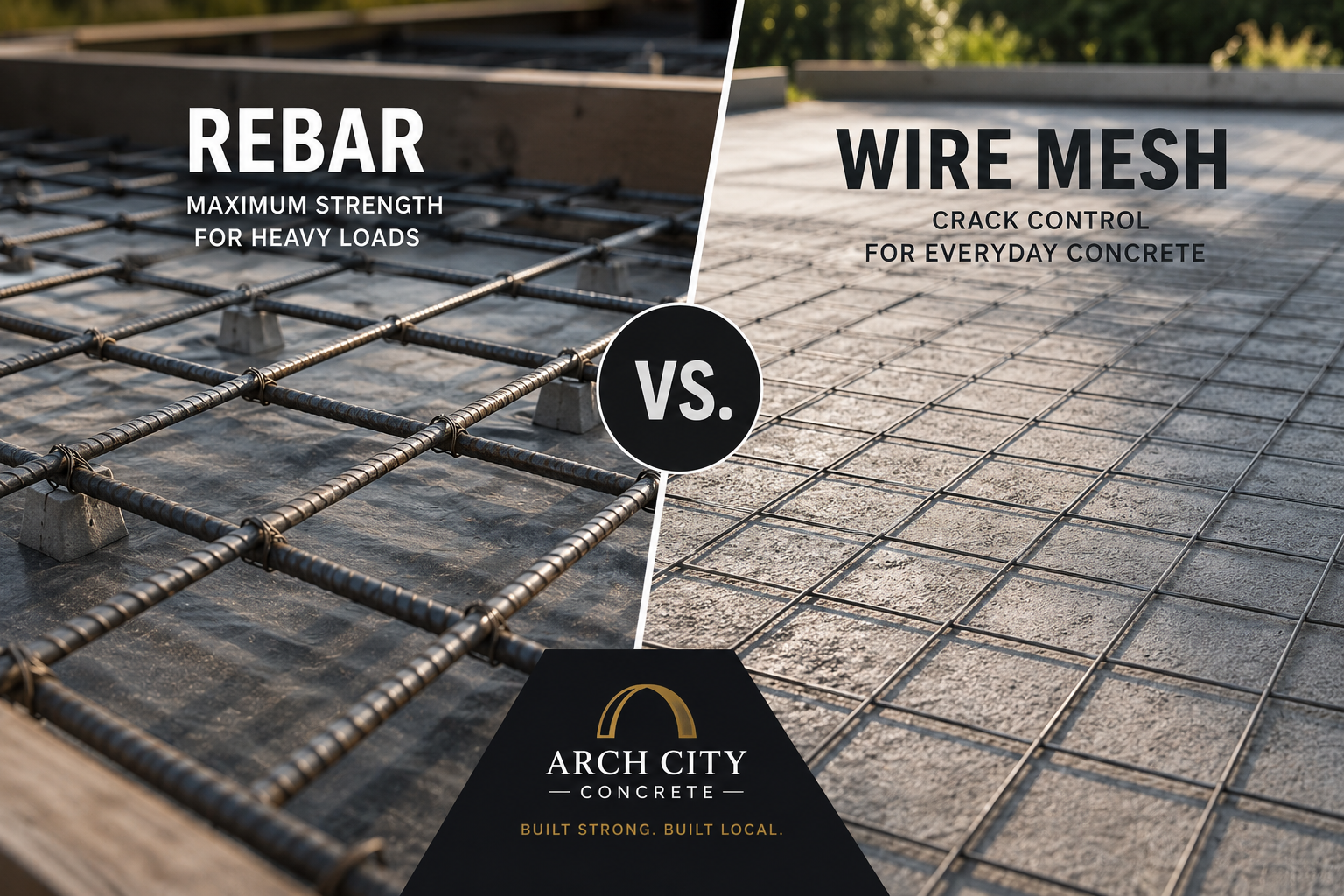
Quality installation cannot make concrete immune to cracking — but it can control where and how cracking happens, which is exactly what reinforcement and properly placed control joints are designed to do.
Even professionally installed concrete is expected to develop small shrinkage cracks. Quality installation doesn’t eliminate cracking — it controls where cracking occurs.
What’s Really Happening Beneath the Slab
A concrete driveway or patio is really a system, not just a single poured surface. Underneath the visible slab sits a layer of compacted aggregate base, which rests on the compacted subgrade, which sits on the natural soil beneath your property.
Each layer plays a role in how the finished surface performs. When any layer isn’t doing its job — soil that’s too soft, a base that wasn’t compacted properly, or water that’s allowed to collect underneath — the slab above it has to absorb the movement. That’s when cracks start to form.
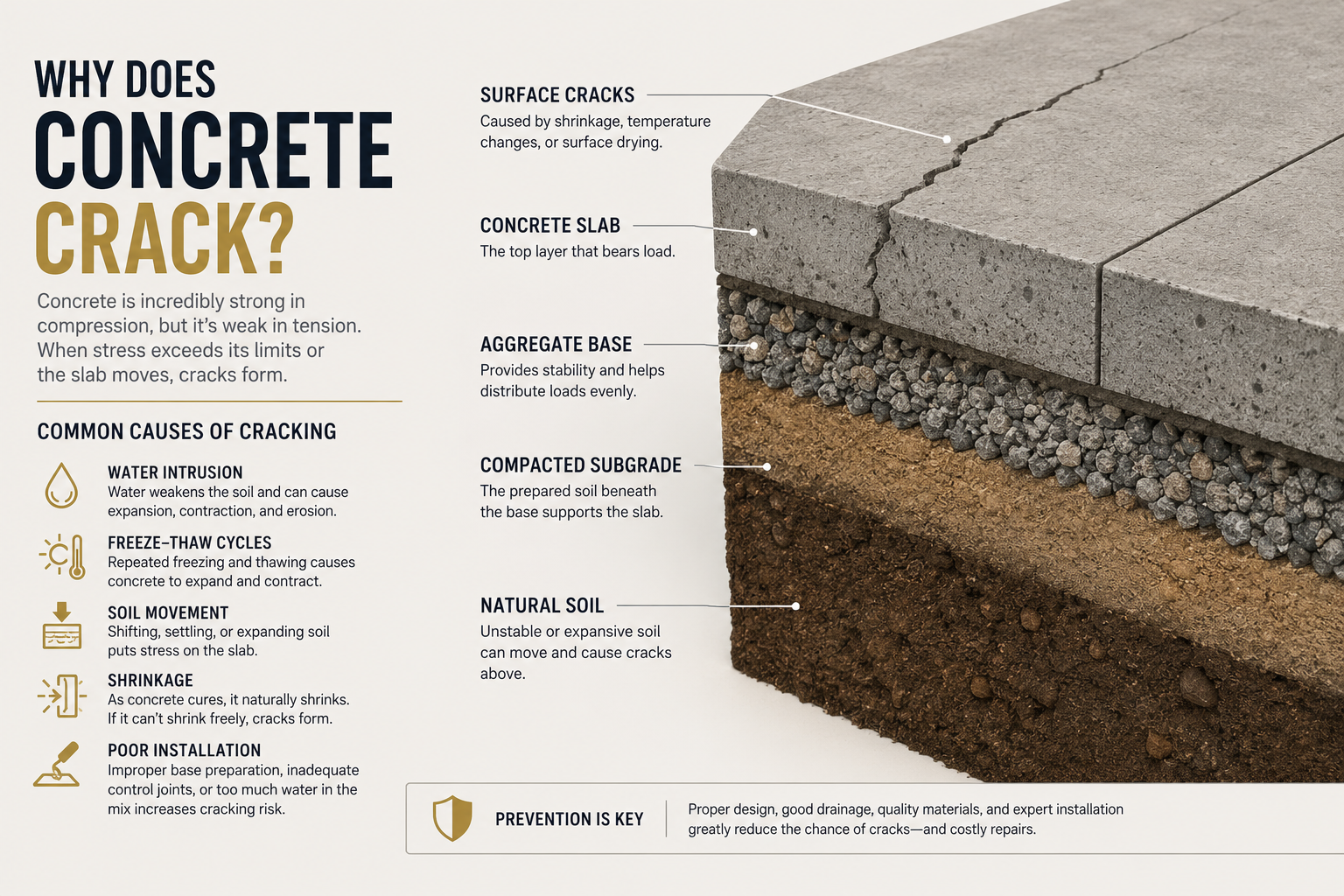
This is one reason two driveways that look identical from the curb can perform very differently over time. What’s happening below the surface often matters more than the concrete mix itself.
Common Types of Concrete Cracks
Not all cracks are created equal. Here’s how the most common types compare, from the everyday hairline crack to the kind that warrants a professional evaluation:
When Cracking Points to a Bigger Problem
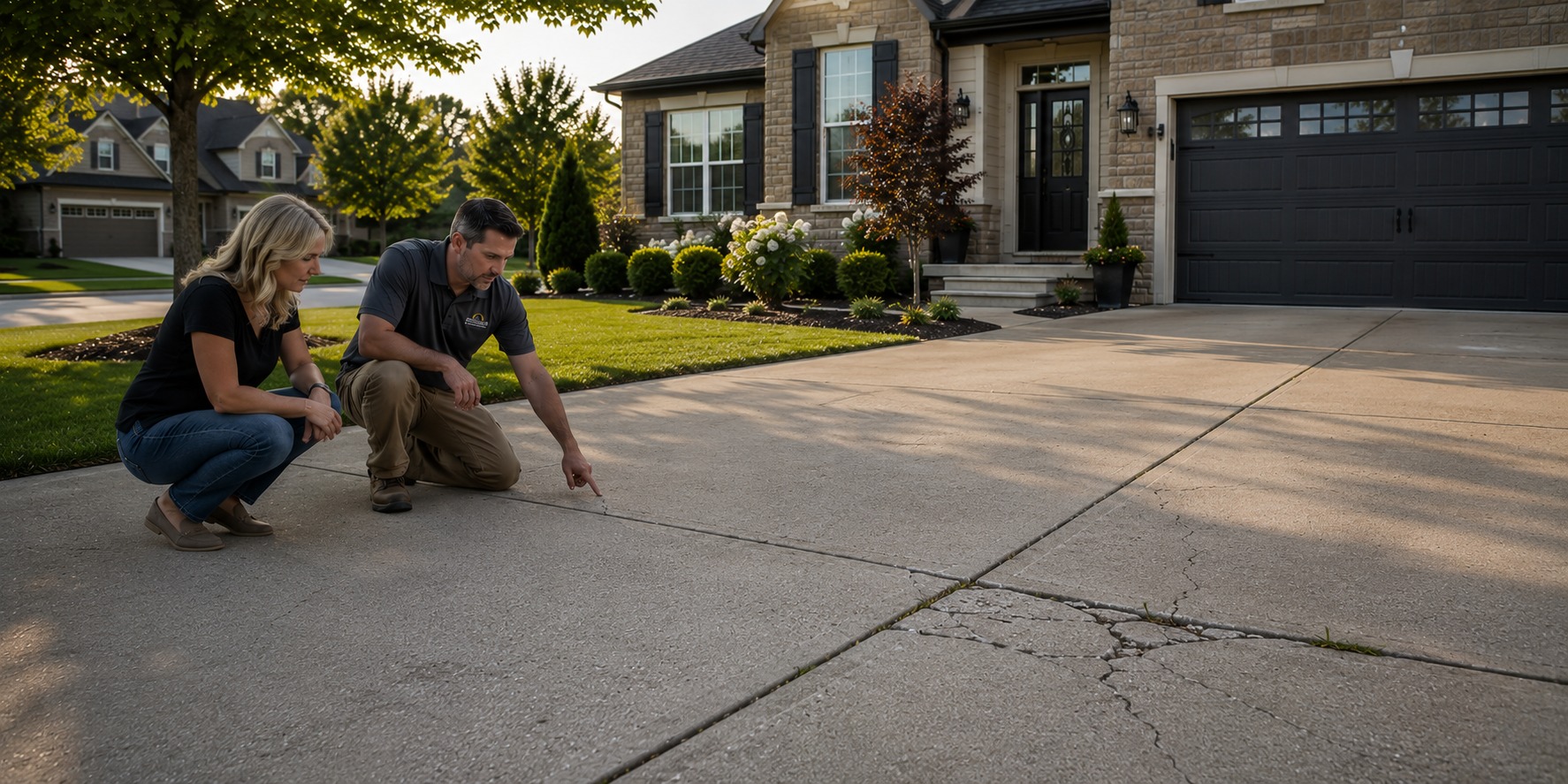
The width of a crack is less important than most homeowners assume. A hairline crack that hasn’t changed in years is far less concerning than a thinner crack that keeps getting wider every season.
Signs worth having evaluated by a professional include:
- A crack that continues to widen over time
- Vertical displacement, where one side of the crack sits higher than the other
- Diagonal cracks running corner to corner
- Multiple cracks appearing across several slabs at once
- Cracks paired with standing water, sinking, or uneven walking surfaces
The width of a crack matters less than whether it continues moving. Movement is often a stronger indicator of structural issues than appearance alone.
If you’re already noticing several of these signs, our guide on repairing vs. replacing concrete walks through how to tell which option makes more sense for your situation.
Why Missouri Concrete Is Especially Prone to Cracking
Homeowners throughout St. Charles County and the greater St. Louis area deal with a particular combination of stressors that makes cracking more common than in milder, more stable climates.
Many St. Charles County subdivisions sit on expansive clay soils that shift with changing moisture levels, and Missouri’s freeze-thaw cycles add repeated seasonal stress on top of that movement. Proper base preparation, drainage, and reinforcement won’t prevent every crack — but they significantly reduce how much movement a slab experiences over its lifetime.
This is why the decisions made before the concrete is even poured — base preparation, control joint spacing, and reinforcement choice — matter so much for how a driveway or patio holds up through Missouri’s seasons.
The Bottom Line
Cracking is simply part of how concrete works — not a sign that something went wrong. Most cracks are cosmetic, predictable, and nothing to lose sleep over.
What matters is knowing the difference between a crack that’s just part of the process and one that’s actively telling you something has shifted beneath the surface. When in doubt, a quick professional evaluation can offer real peace of mind.
If you’re planning a new pour or thinking ahead about a future project, it’s also worth reading up on choosing the right concrete driveway and understanding what a concrete driveway costs — both cover the base prep and reinforcement decisions that help keep future cracking to a minimum.